
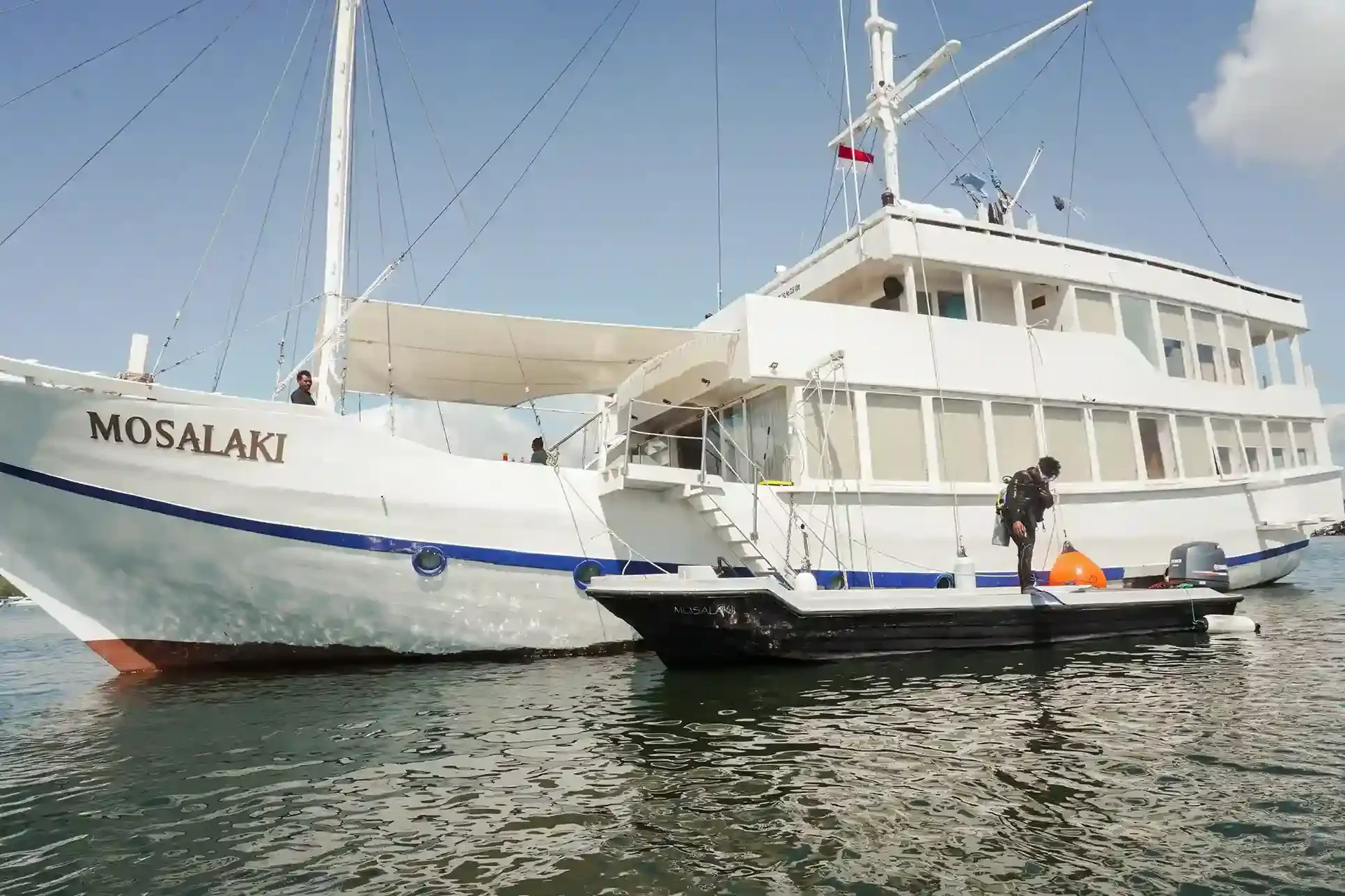
Manokwari port, on Doreri Bay at the north-eastern tip of West Papua’s Bird’s Head Peninsula, is one of the two main embarkation points for Cenderawasih Bay liveaboards — the other being Nabire to the south. Most vessels board guests here in the afternoon, cross the bay overnight, and put you on the Kwatisore whale shark bagans within a day or two. This guide covers the practical, on-the-ground details of embarkation day itself: which pier you will actually use, how to get there from Rendani Airport, what the boarding timeline looks like, where the crew provisions, and the WWII wrecks sitting within tender distance of the anchorage.
Why Do Cenderawasih Bay Liveaboards Embark at Manokwari Port?
Geography, mostly. Teluk Cenderawasih is Indonesia’s largest marine national park, and its dive sites are spread along a huge arc of coastline with no road access worth speaking of. Manokwari sits at the north-western entrance to the bay, Nabire at its southern end, so a liveaboard that embarks at one and disembarks at the other can run a one-way route through the whole park without backtracking — which is exactly how most Cenderawasih Bay liveaboard trips are structured. Manokwari also has what expedition vessels need before a week or more at sea: a sheltered natural harbor in Doreri Bay, fuel and water supply, fresh markets, and daily domestic flights into Rendani Airport.
As of 2026, liveaboards position into Cenderawasih seasonally — many boats spend only part of the year here before repositioning to Raja Ampat, Komodo, or Banda — so embarkation dates cluster around the operating season rather than running year-round. The whale sharks at Kwatisore, by contrast, are present near the bagans almost all year. Your departure date is set by boat schedules, not by the animals.
Where Exactly Do You Board? Pier Locations in Doreri Bay
Manokwari’s harbor front is a working waterfront, not a marina, and it helps to know the difference between its parts:
- The main commercial port (Pelabuhan Manokwari). This is where Pelni passenger ships, ferries, and cargo vessels berth. Liveaboards generally do not tie up alongside here — the quay is built for big steel hulls, and schedules are dominated by commercial traffic.
- The liveaboard anchorage. Most expedition boats anchor off in Doreri Bay, protected by the Mansinam and Lemon islands that sit across the bay’s mouth. You board by tender — a short ride from a jetty, usually a matter of minutes rather than a long transfer.
- Smaller jetties and beach steps. The exact pickup point varies by vessel and by what is free on the day. Your operator confirms the meeting point a day or two before departure; on the day itself, crew typically meet you in town or at the airport and handle the jetty logistics for you.
The practical takeaway: do not plan to “walk to your boat” at Manokwari port. Plan to be met. Every reputable operator running this route includes a crewed pickup, because the waterfront has no signage aimed at foreign guests and the tender point can shift with tide and traffic.
How Do You Get from Rendani Airport to the Harbor?
Rendani Airport (MKW) sits only a few kilometres from the town centre and the waterfront, so the ground transfer is one of the easiest in Papua — generally a drive of around 15 to 30 minutes depending on traffic and where your tender point is. Almost all liveaboard operators include this transfer; a crew member or local agent meets you at arrivals with the boat’s name on a sign.
Two flight-related notes matter for embarkation day, and they are about timing rather than routing (for full routing options into the region, see our separate Manokwari travel page):
- Arrive the day before if you can. Domestic connections into Manokwari typically route through hubs like Makassar or Sorong, and delays propagate. A missed embarkation on a one-way liveaboard route is very hard to recover from, because the boat’s next stop may be an overnight sail away. As of 2026, most operators explicitly recommend a buffer night in Manokwari.
- Mind the timezone. Papua runs on Eastern Indonesia Time (WIT, UTC+9) — two hours ahead of Jakarta. Double-check that your “14:00 boarding” is 14:00 local, and reconfirm domestic flight times in local time when you book.
If you do overnight in town, Manokwari has straightforward business-class hotels rather than resorts. Treat the night as logistics, not holiday: charge camera batteries, withdraw cash, and repack so dive gear is accessible.
What Does Embarkation Day Actually Look Like?
Schedules differ boat to boat, but a typical Manokwari embarkation day runs like this:
| Time (approx.) | What happens |
|---|---|
| Morning | Guests arriving on the day are met at Rendani Airport; guests who overnighted are collected from hotels. Luggage goes ahead to the tender point with crew. |
| Midday | Optional provisioning and ATM stop in town; some boats host guests for lunch on board instead. |
| Early afternoon | Tender transfer from the jetty to the anchorage. Cabin allocation, gear setup on the dive deck, paperwork — passports are needed for national park permit processing, which your operator arranges. |
| Late afternoon | Safety and boat briefing, sometimes a check dive or a shakedown snorkel near Doreri Bay if the schedule allows. |
| Evening | Welcome dinner; the boat either departs on the overnight passage toward the park or stays at anchor and sails at first light. |
The single most useful thing you can do to make this day smooth is administrative: have your passport, dive certification card, and insurance details ready in one folder (physical or on your phone). Park permits, port clearance, and crew manifests all draw on the same documents, and one missing item can hold the tender at the jetty.
Provisioning Stops: Markets, Cash, and Last-Minute Supplies
Once the boat leaves Manokwari port, the next real resupply point is Nabire — days away — so embarkation day is your last chance for anything you forgot. In town, the crew provision fresh produce and fish at the main local markets, Pasar Wosi and Pasar Sanggeng, and there are general stores for packaged goods. For guests, the priorities are more specific:
- Cash. Manokwari has bank ATMs; Kwatisore and the villages inside the park effectively do not. Withdraw what you will want for crew tips and any village purchases before boarding. Card acceptance on board varies by operator — confirm in advance.
- Pharmacy items. Seasickness tablets, ear drops, reef-safe sunscreen, and any personal medication. Boat first-aid kits cover emergencies, not preferences.
- Camera consumables. Memory cards and spare batteries are hard to find once you sail. Whale shark days at the bagans burn storage faster than almost any other dive destination.
- Connectivity. An Indonesian SIM with data works in Manokwari and fades quickly inside the bay. Download offline maps, reading, and entertainment before you board; treat the crossing as offline time.
Fees for the national park, port handling, and permits are normally bundled or collected by your operator rather than paid by you at a counter — confirm what is included when you book, and treat any figures you see quoted online as indicative until your operator confirms them in writing.
WWII Wreck Dives Within Reach of the Anchorage
Manokwari has a claim to fame that many guests only discover on embarkation day: Doreri Bay was a Japanese base in the Second World War, and several wrecks from that period lie at recreational depths within a short boat ride of the anchorage. The best known is the Shinwa Maru, a Japanese cargo vessel resting on a slope in recreational depth range, still holding cargo and superstructure; the shallow “Cross Wreck” — named for the memorial cross that marks it — is close enough to shore to suit less experienced wreck divers. Visibility in the bay is variable, but the historical density is remarkable for a port town.
Some itineraries build a Doreri Bay wreck dive into day one or the final morning; others skip it in favour of more time at Kwatisore. If sunken history matters to you, say so before the schedule is fixed — and if wrecks are a primary goal rather than a bonus, look at our dedicated Cenderawasih Bay wreck diving trips, which pair the Manokwari wrecks with the aircraft and shipwreck sites deeper inside the park. Divers who want the full arc — wrecks, reefs, and whale sharks in one route — are usually best served by a longer Cenderawasih Bay dive safari rather than a short hop.
Quick Answers for Embarkation Day
- Can I reach the harbor on my own? Physically yes — it is minutes from town — but do not. Boarding is by tender from a point your crew confirms on the day.
- Is there a departure terminal or lounge? No. Manokwari port is a working commercial harbor; your “lounge” is the boat itself, which is why crews board guests early.
- What if my flight is delayed? Tell your operator immediately. With a same-day delay, boats can sometimes hold departure a few hours; with an overnight delay on a one-way route, a speedboat catch-up may be possible but is costly. This is the strongest argument for the buffer night.
- Do I clear immigration here? No — international arrival formalities happen at your first Indonesian airport. Manokwari formalities are domestic: park permits and crew manifests, handled by the operator with your passport copy.
Plan Your Embarkation with a Trip Desk That Knows the Route
Embarkation day at Manokwari port is simple when someone who knows the waterfront is holding the schedule — and stressful when nobody is. Our desk matches you with the right vessel and departure point (Manokwari or Nabire), confirms transfer and provisioning logistics, and builds buffer days that protect your booking. Part of Juara Holding Group — operating from Bali across Indonesia since 2015. Message us on WhatsApp at +62 811-3941-4563 or email [email protected] with your dates, and we will map your embarkation day hour by hour.