Data Column A · operator watch-logs
The 12-Month Watch Almanac
Bagan aggregation at Kwatisore is recorded year-round, so the honest question is not “which month has whale sharks” — it is sea comfort, wind and visibility. Notes below are qualitative, from operator logs; we do not print invented sighting percentages.
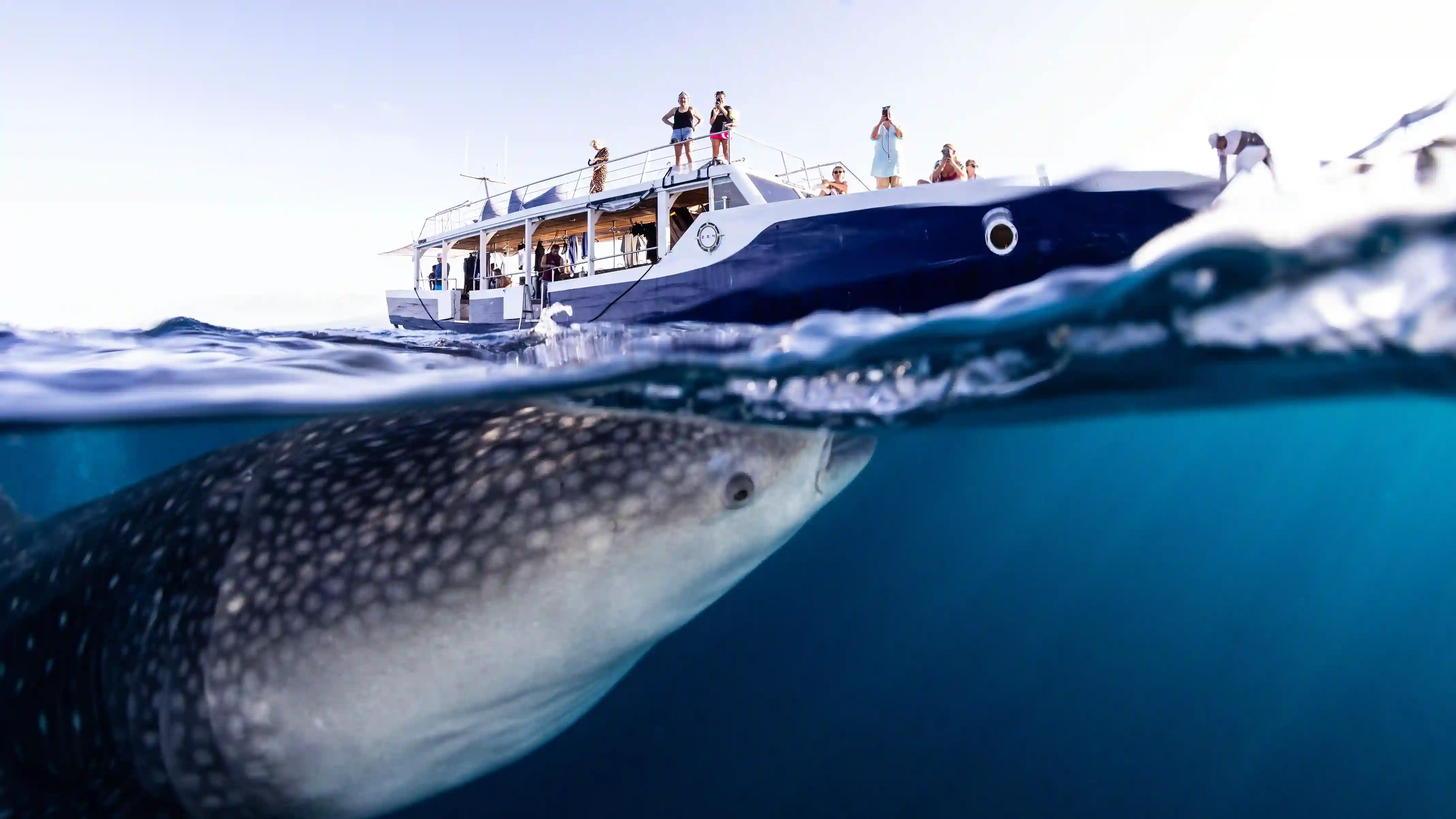
The Aggregation
The shark comes to the boat — sessions run from the surface, not from depth.
Data Column B · permits & fees
The Clearance Desk: SIMAKSI & Park Fee Ledger
Teluk Cenderawasih National Park is a managed conservation area. Every visitor needs the SIMAKSI entry permit plus the published fee lines below. We arrange the paperwork with your booking; the ledger is printed here so you can check our maths.
| Ledger line | Amount | Basis | Stamp |
|---|---|---|---|
| SIMAKSI conservation entry permit (BTNTC) | administrative — arranged via operator | per person, passport copy required; allow 1–2 working days | as of 2026 |
| Park entry — international visitor | IDR 150,000 weekday · IDR 225,000 holiday | per person, per day | as of 2026 |
| Park entry — domestic visitor | IDR 5,000 weekday · IDR 7,500 holiday | per person, per day | as of 2026 |
| Diving activity fee | IDR 25,000 | per person, per day | as of 2026 |
| Snorkelling activity fee | IDR 15,000 | per person, per day | as of 2026 |
| Vessel entry fee | from IDR 100,000 | per vessel, per day, by vessel size | as of 2026 |
Recorded from published national-park tariff lines, August 2026. Tariffs change by regulation — verify the current sheet at the BTNTC office (Balai Besar Taman Nasional Teluk Cenderawasih) in Manokwari or the Nabire field office before travel. Full guide: SIMAKSI Permit & Park Fees.
Data Column C · logistics
The Approach Chain: getting to the bagans
There is no direct international route to Kwatisore — the chain runs through Nabire’s DEO airport, then the harbor, then ~3 hours of open water. Here is the whole chain, leg by leg.
| Leg | Typical duration | Frequency / notes |
|---|---|---|
| Jakarta (CGK) → Makassar (UPG) | ~2 h 20 m | Multiple flights daily |
| Makassar (UPG) → Nabire (DEO) | ~3 h+ | Via Biak or Jayapura on most routings — as of 2026, not daily on every leg; confirm current schedules |
| Jayapura (DJJ) → Nabire (DEO) | ~1 h 10 m | Regional services, several days weekly |
| Nabire airport → harbor | ~15–25 min | Road transfer, arranged with your booking |
| Nabire harbor → Kwatisore bagan zone | ~3 h | Speedboat; dawn departures standard (~05:30 harbor call) |
| Alternative gateway: Manokwari side | varies | Longer sea legs; used by liveaboard embarkations — see Manokwari route guide |
Schedules recorded August 2026 and change often in Papua — the desk re-checks the current flight pattern for every quote.
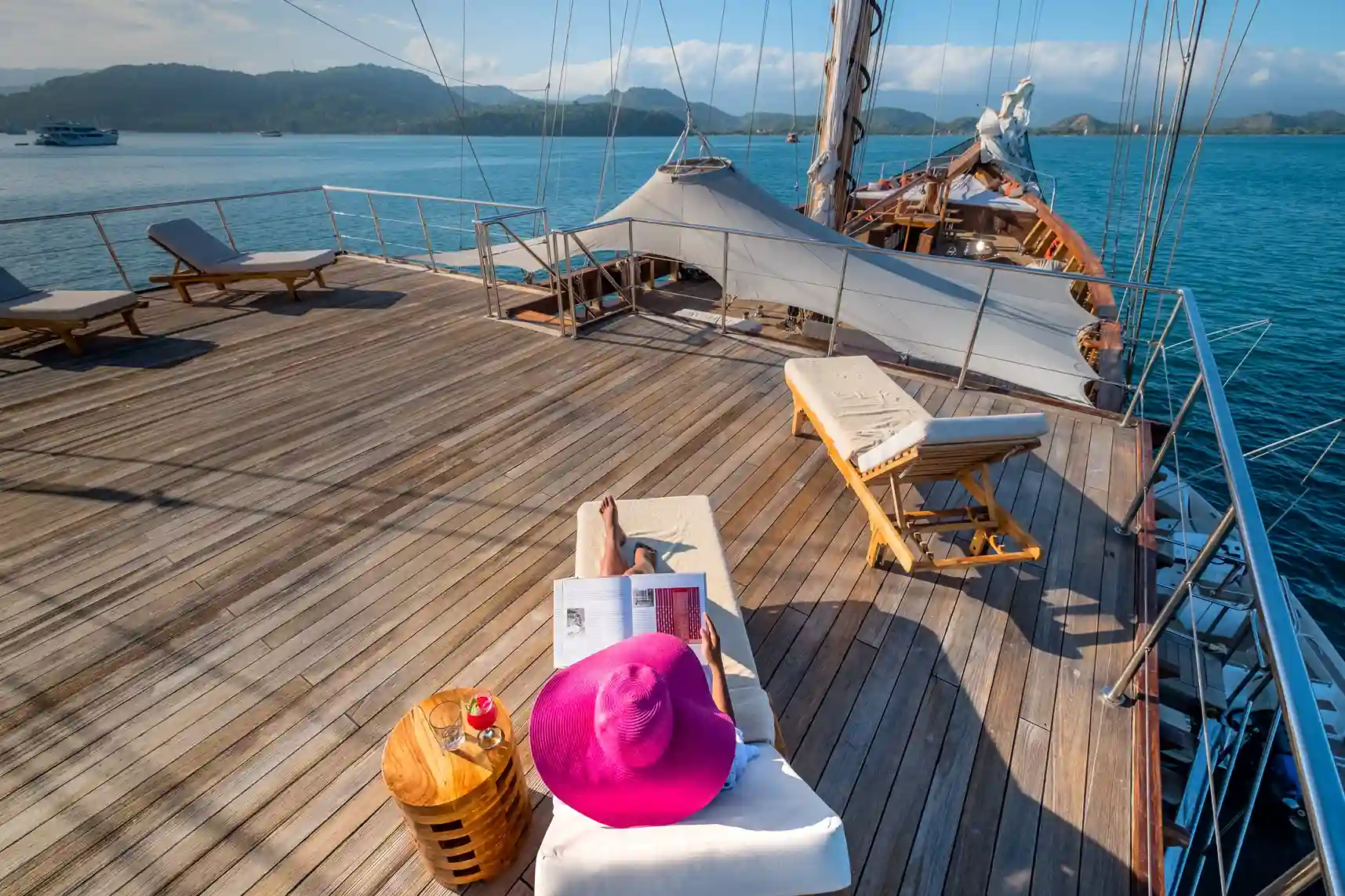
The Approach
The upper deck between sessions — where the day’s kit lives.
Data Column D · the comparison others skip
Basing Verdict: land-based Nabire vs liveaboard
The two honest ways to do Cenderawasih Bay, priced side by side. Neither is “better” — they suit different trips, and we broker both.
Land-based Nabire
- Per-day band
- ≈ USD 130–260 per person (room, meals, guide) — boat share and park fees billed separately, as itemised above
- Sea time
- ~6–8 h on bagan days; you return to town each afternoon
- Comfort
- Simple hotels in Nabire — hot showers, phone signal, town dinners
- Who it suits
- Shorter trips, tighter budgets, families who want land nights, snorkel-first visitors
Liveaboard
- Per-day band
- ≈ USD 350–700 per person, cabin all-in — boat, meals and usually park fees bundled; confirm inclusions in writing
- Sea time
- You sleep on site — the vessel repositions overnight and you take the bagans at first light
- Comfort
- En-suite cabins on the better boats, set menus, compressor and tender on board
- Who it suits
- Divers, photographers, 6+ night itineraries, and Raja Ampat combination routes
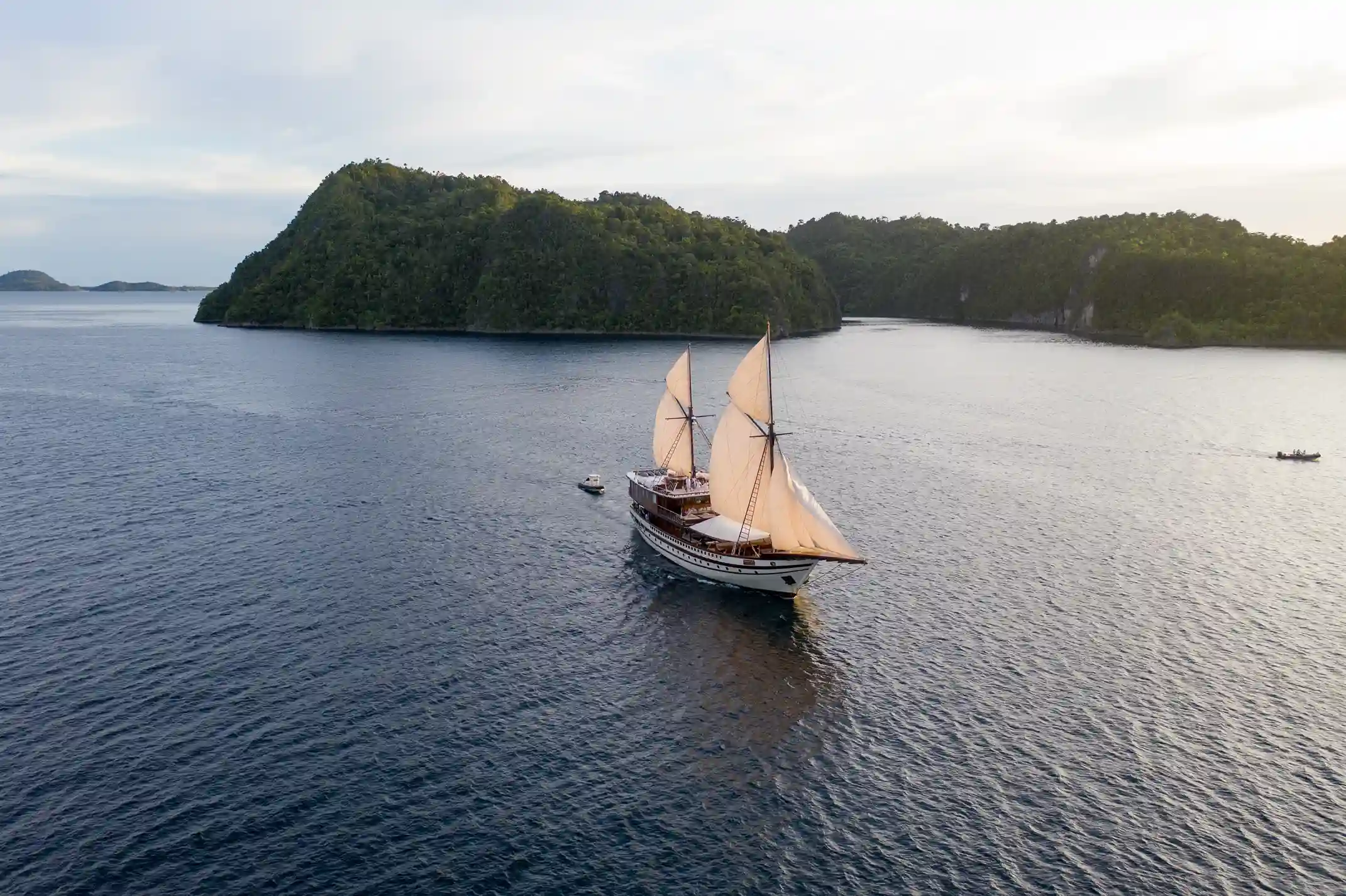
On the Water
A wooden liveaboard working the park — the overnight-repositioning advantage in one frame.
Briefing Files
Choose your route into the bay
Every trip file below is kept to the same standard as this desk: dated figures, plain inclusions, no guarantees we cannot keep.
How this desk is kept honest
Sources & corrections
- 01 Fee lines are transcribed from published national-park tariff sheets and re-checked against the BTNTC office; every row carries its recording date.
- 02 Monthly notes come from operator watch-logs and crew reports at the Kwatisore bagans — qualitative only; we refuse to print invented sighting percentages.
- 03 Flight and harbor patterns are re-verified per quote; Papua schedules change and we say so.
- 04 We are brokers: trips run with vetted local operators and liveaboard fleets, coordinated through the Juara Holding Group trade desk.
- 05 Spot an outdated figure? Write to [email protected] — corrections are stamped and dated. See our editorial standards.
Top questions at the desk
Answered plainly, before you pay
The five questions the desk is asked most. Longer answers, and ninety-five more, sit in the full FAQ.
Read the full FAQ — 100 questions
01Are whale sharks really seen year-round in Cenderawasih Bay?
Yes — the bagan aggregation at Kwatisore is recorded in every month of the year, which is what makes this bay unusual. What changes month to month is sea comfort, wind and visibility, not the presence of the watch. No wild-animal sighting can be guaranteed on any single morning, and we never claim otherwise.
02How do I get the SIMAKSI permit?
The SIMAKSI conservation entry permit is issued by the park authority (BTNTC). We arrange it with your booking — send a passport copy and allow 1–2 working days. The park entry and activity fee lines are itemised in the Clearance Desk ledger above, dated as of 2026.
03How do I reach Nabire?
Fly to Nabire (DEO) via Makassar or Jayapura — there is no direct international service. From Nabire it is a short transfer to the harbor and roughly 3 hours by speedboat to the Kwatisore bagan zone, with departures around dawn.
04Land-based or liveaboard — which should I pick?
Land-based Nabire runs roughly USD 130–260 per person per day plus boat share and fees, with town nights and ~3 h each way on bagan days. Liveaboards run roughly USD 350–700 per person per day with the vessel sleeping on site. Divers and photographers usually take the liveaboard; shorter trips and families usually base on land.
05Do you guarantee a whale shark encounter?
No — and be wary of anyone who does. The Kwatisore aggregation is one of the most consistent recorded anywhere, but these are wild animals in a working fishery. What we do guarantee: dated fees, honest month notes, briefed in-water protocol, and a straight answer before you pay.
The Desk Is Open
Get your dated briefing and quote
Tell us your month, basing preference and party size. You get an itinerary with the same standard as this page: itemised fees, honest month notes, real schedules.
Handled by the Juara Holding Group trade desk — brokering and coordinating with vetted Cenderawasih Bay operators and liveaboard fleets since 2015. Replies in working hours, WIT (UTC+9) friendly.