
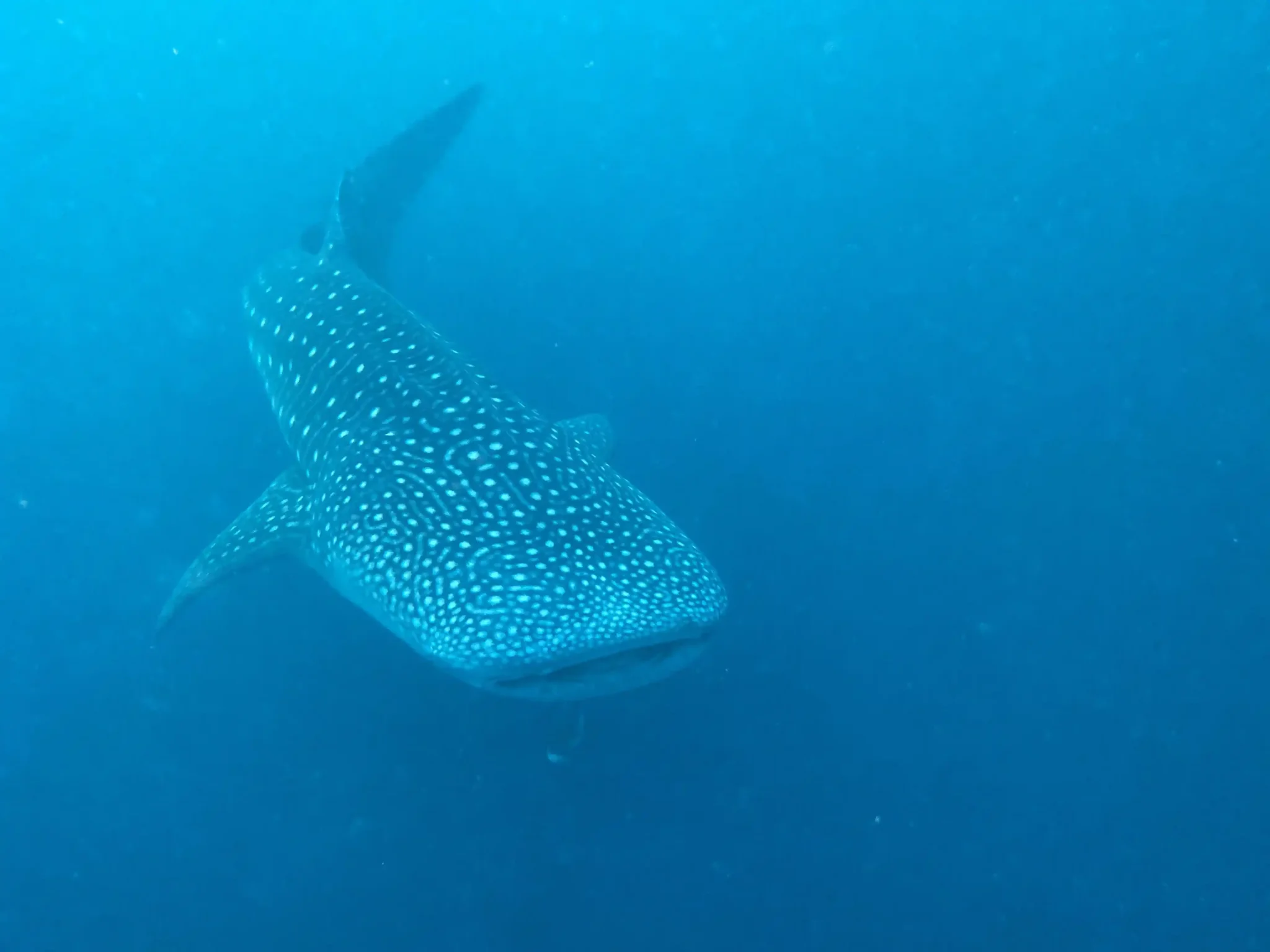
Yes — as of 2026, Cenderawasih Bay remains the only well-documented site in Indonesia where whale sharks are recorded in every calendar month. So if you are asking can you see whale sharks all year in Cenderawasih Bay, the short answer is: the animals are present year-round at the Kwatisore aggregation near Nabire, but “year-round presence” is a statement about the population, not a guarantee for any single morning. This article examines the residency claim properly — what monthly consistency actually looks like, why juvenile males linger for months at a time, and the few weather windows that affect your boat rather than the sharks.
Can You See Whale Sharks All Year in Cenderawasih Bay?
The claim rests on three well-established facts. First, Teluk Cenderawasih is Indonesia’s largest marine national park, covering roughly 1.4 million hectares of sheltered water tucked between the Bird’s Head Peninsula and the islands of Biak and Yapen. Second, in the bay’s southeastern corner at Kwatisore, whale sharks aggregate around bagan — traditional lift-net fishing platforms that target small silverside baitfish. Third, monitoring by park authorities, conservation researchers, and the operators who work the site daily has recorded whale shark sightings in every month of the year, not just in a peak season.
That last point is what separates Cenderawasih from almost every other whale shark destination on Earth. At most aggregation sites — Australia’s Ningaloo Reef, Donsol in the Philippines, the Yucatán in Mexico — the sharks arrive to exploit a seasonal food pulse such as coral spawn or a plankton bloom, then leave when it ends. In Cenderawasih, the food source is the bagan fishery itself, and the bagans work all year. The sharks have learned to visit the platforms and suck baitfish through the nets, and because that food supply never migrates, neither do many of the sharks.
What Does Monthly Sighting Consistency Actually Look Like?
No honest operator publishes a precise percentage for each month — sighting logs vary by platform, by weather, and by how many bagans are active on a given week. What the long-run pattern from park monitoring and daily operator experience supports, per 2026, is this: there is no month in which sightings drop to zero, and the variation between months is driven far more by sea state and bagan activity than by shark behaviour.
| Period | Whale shark presence | Sea and access notes |
|---|---|---|
| December – March | Sharks present at the bagans | Northwest monsoon period; occasional rain squalls and reduced visibility on some days, but the bay’s sheltered geography keeps interior waters workable |
| April – June | Sharks present; often cited by operators as a comfortable window | Transitional calm seas, generally settled conditions for the Nabire–Kwatisore crossing |
| July – September | Sharks present | Southeast trade winds can raise afternoon chop; morning bagan sessions are standard practice in any case, so impact on encounters is limited |
| October – November | Sharks present | Another transitional window with typically calm seas and good light for photography |
Read that table carefully and you will notice the pattern: the middle column barely changes. The right-hand column — boat comfort, crossing conditions, light for photographers — is where the real month-to-month differences live. That is the correct frame for the question can you see whale sharks all year in Cenderawasih Bay: the sharks hold steady; the logistics fluctuate mildly.
Why Do Juvenile Males Linger in the Bay?
Photo-identification work in Cenderawasih has consistently found that the aggregation is dominated by juvenile males, mostly in the 3 to 8 metre range. Satellite-tagging studies by conservation researchers working with the national park have shown that some individuals remain inside the bay for extended periods — months rather than days — instead of following the long-distance oceanic movements whale sharks are known for elsewhere.
Three factors plausibly explain this residency, and they reinforce each other:
- A reliable, non-seasonal food source. The bagan fishery concentrates baitfish in one predictable place every night. For a young shark still growing rapidly, a dependable feeding station beats speculative ocean crossings.
- Sheltered, warm, deep water close to the food. The bay’s basin drops steeply near Kwatisore, so sharks can rest at depth and return to the platforms with minimal travel. The enclosing landmasses damp the Pacific swell that batters exposed coastlines.
- Life stage. Juvenile males at many whale shark sites worldwide show coastal, food-focused behaviour before maturing and ranging farther. Cenderawasih simply lets that phase play out in one place, all year.
There is also a cultural layer worth knowing: local fishermen have long regarded the whale shark — gurano bintang, the “star shark” — as a bringer of good fortune rather than a nuisance raiding their nets. That tolerance is a quiet but essential ingredient in why the aggregation has persisted alongside an active fishery.
Which Weather Windows Affect Boat Access?
Because the sharks do not leave, trip planning in Cenderawasih is really about water access, and the constraints are modest:
- The Nabire–Kwatisore crossing. Land-based trips run from Nabire by boat, typically around three hours to the Kwatisore area. During squally spells in the northwest monsoon (roughly December to March) a departure may shift by a few hours; full cancellations are uncommon precisely because the bay is sheltered.
- Liveaboard scheduling. Liveaboard vessels operate in Cenderawasih on seasonal schedules — many concentrate their departures in the calmer transitional months, partly for guest comfort and partly because their annual routes rotate between Indonesian regions. As a result, your choice of month may be dictated by vessel availability rather than by shark presence. A Cenderawasih Bay whale shark liveaboard gives you the bagans plus the park’s reefs and WWII-era wrecks in one itinerary, but you book around the boats’ calendars.
- Flights into Papua. Reaching Nabire involves domestic connections (commonly via Jakarta or Makassar, sometimes through Biak), and regional flight schedules change more often than in western Indonesia. Building a buffer day on either side of your bay time is standard, sensible practice as of 2026.
Does Year-Round Presence Mean Guaranteed Sightings?
No — and any operator who promises a guarantee is overselling wild animals. The fair way to state it: asking can you see whale sharks all year in Cenderawasih Bay is asking about probability, and the probability here is unusually high in every month because the aggregation is resident and the encounter method is precise — you go to active bagans at first light, when sharks feed. But on any single session, shark numbers can range from one animal to several, and occasionally a platform has a quiet morning. This is exactly why itineraries in the bay are built with multiple bagan sessions across two or more days: the redundancy, not the month, is what makes encounter rates so dependable.
Interaction rules apply year-round as well — keep roughly two metres from the animal, no touching, no flash close to the eyes, and follow your guide’s briefing. The national park setting means these are not suggestions; they are conditions of access that protect the very residency this article describes.
How Should You Plan Around the Year-Round Pattern?
The practical conclusion is liberating: pick your month for your own reasons — holidays, flight availability, photography light, sea comfort — rather than chasing a mythical peak season. Then choose the format that fits your time and budget:
- Short and focused: Kwatisore whale shark trips concentrate entirely on the aggregation, ideal if the sharks are your single objective.
- Flexible and economical: land-based Nabire whale shark tours run throughout the year on flexible dates, since they depend on daily boats rather than a vessel’s annual route.
- Comprehensive: a multi-day liveaboard adds the park’s reef and wreck diving around the whale shark sessions.
Costs vary meaningfully with format, group size, and season; treat any figure you see online as indicative until confirmed against current dates. For the full context on encounter etiquette, operators, and what a trip involves end to end, our Cenderawasih Bay whale shark guide remains the deepest starting point on this site.
Planning dates and want a straight answer on conditions for your specific month? Message our trip desk on WhatsApp at +62 811-3941-4563 or email [email protected] and we will map flights, boats, and bagan time around your schedule. Part of Juara Holding Group — operating from Bali across Indonesia since 2015.