
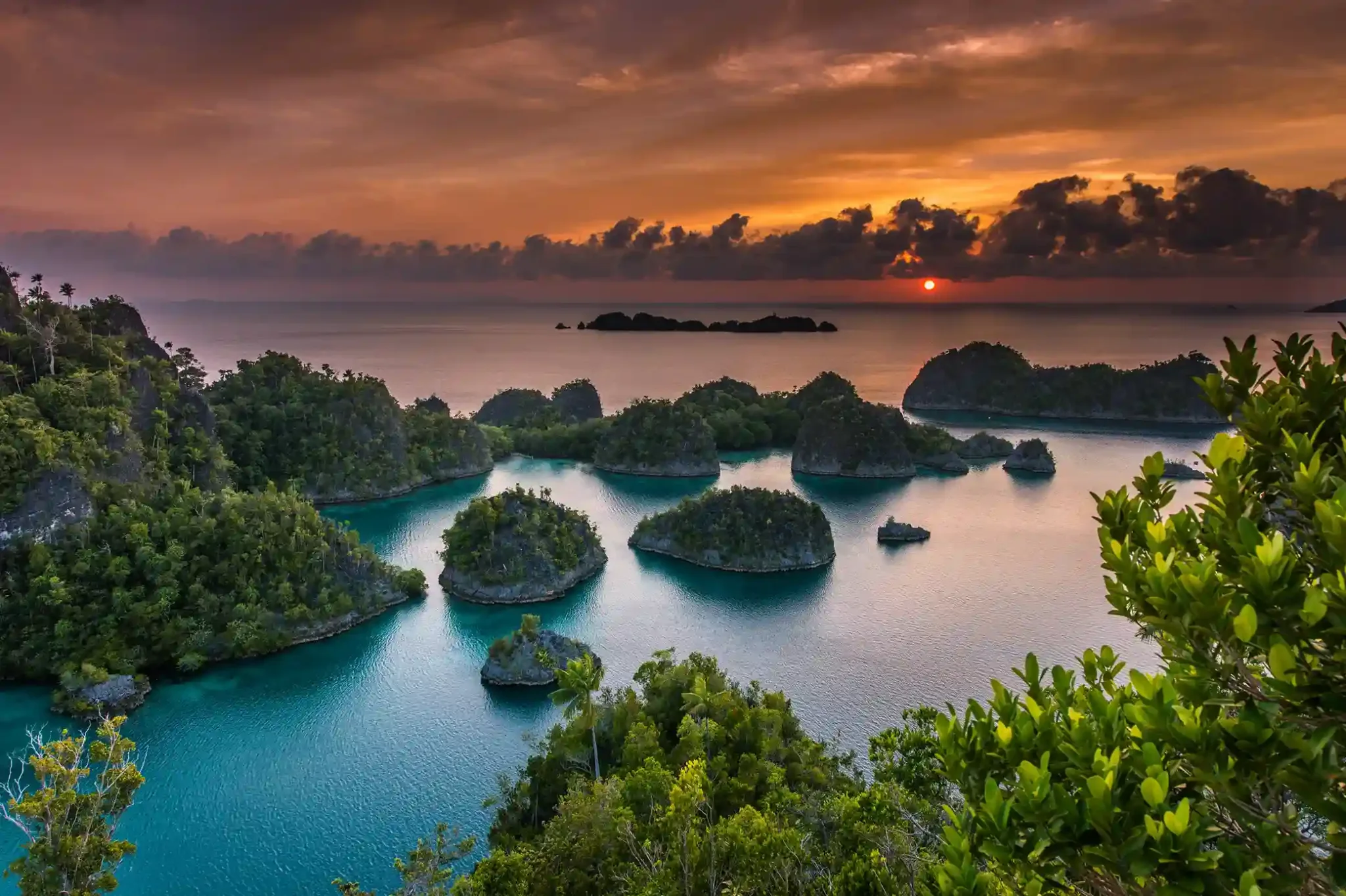
- June-October: The dry season offers optimal surface conditions and 20-30 meter visibility.
- November-May: The wet season sees fewer visitors and equally reliable whale shark sightings.
- Year-Round: Water temperatures remain a stable 27-29°C, ideal for diving and snorkeling.
The water is a placid, impossible turquoise. Below the hull of your phinisi, a shadow a dozen meters long materializes from the deep blue. It is not a fleeting glimpse; it is a constant, a gentle giant drawn to the scent of baitfish from the traditional fishing platforms, or bagans, that dot the horizon. This is the daily reality when visiting Cenderawasih Bay, Papua, a corner of the world that operates on its own schedule, largely indifferent to the seasonal whims that dictate travel elsewhere. The question, then, is not if you will have a profound encounter here, but how to tailor the timing of your journey to match your precise definition of perfection. As a travel editor who has tracked the evolution of Indonesia’s most exclusive destinations for over a decade, I can tell you that Cenderawasih’s calendar is less a matter of “good” versus “bad” and more a nuanced choice between excellent and exceptional. (See Conservation International — Cenderawasih for context.)
The Year-Round Phenomenon: Why Cenderawasih Defies Seasonal Norms
To understand when to visit, one must first grasp why Cenderawasih Bay is fundamentally different from nearly every other whale shark destination on Earth. In places like Mexico or the Philippines, whale shark encounters are seasonal, tied to spawning events and plankton blooms that draw migratory populations for a few months at a time. Cenderawasih laughs at such temporal constraints. Here, the whale sharks are residents, not tourists. An almost exclusively juvenile male population has discovered a permanent food source: the small baitfish, or ikan puri, that slip through the nets of the semi-permanent fishing platforms. For decades, local fishermen have shared their catch, a relationship that has evolved into one of the most reliable large-animal encounters in the marine world. My contacts on the ground, including veteran expedition leaders who have charted these waters since the early 2000s, confirm that sightings are virtually guaranteed, regardless of the month.
The bay’s unique geography is the key. As Indonesia’s largest marine national park, spanning over 14,535 square kilometers, its semi-enclosed nature, protected by the large island of Biak at its mouth, creates a calm, nutrient-rich environment. This geological setup mitigates the full force of oceanic currents and weather systems, fostering a stable ecosystem. Unlike the open seas of the Banda or Flores, the waters here remain relatively predictable. This stability is the bedrock of the entire experience, ensuring the bagans can operate year-round and, in turn, that the whale sharks never have a reason to leave. This allows for a travel calculus based not on the presence of wildlife, but on the subtleties of weather, water clarity, and personal preference for solitude.
Decoding the “Dry” Season: June to October
For the discerning traveler seeking textbook tropical perfection, the period from June to October presents a compelling case. This corridor aligns with Indonesia’s dry season, and while West Papua has its own microclimates, the trend holds. You can expect long stretches of sun-drenched days, minimal rainfall, and a significant drop in humidity. The most tangible benefit for those arriving by liveaboard—the only truly luxurious way to explore the bay’s vastness—is the sea state. The surfaces are often glassy, making for exceptionally smooth sailing between dive sites and anchorages. Journeys from the port of entry, typically Nabire or Manokwari, are at their most comfortable during this time.
Underwater, these months often deliver peak visibility, frequently pushing beyond 25 or even 30 meters. For photographers and videographers, this is a critical advantage. The ambient light penetrates deeper, illuminating the coral gardens and the intricate patterns on the whale sharks’ skin with cinematic clarity. It’s also the ideal time to explore the bay’s collection of World War II wrecks, such as the P-47 Thunderbolt fighter planes sitting upright on the sandy bottom. While Cenderawasih never experiences the visitor density of Raja Ampat or Komodo, this period is considered its high season. I spoke with a phinisi operator last year who noted that while they might see one or two other vessels a week from July to September, it’s a far cry from the “traffic” in other Indonesian hotspots. Booking a premier charter, which can range from $6,000 to $9,000 per person for an 8-night itinerary, should be done at least 12 months in advance for these prime dates.
Navigating the “Wet” Season: November to May
Dismissing the so-called “wet” season would be a mistake for the intrepid traveler. From November to May, the weather patterns shift, bringing more moisture from the northwest. However, the term “monsoon” is a misnomer here. The rain rarely settles in for days on end. Instead, you’ll more likely experience intense, short-lived downpours, often in the late afternoon, which leave the air feeling refreshed and clean. The skies can be more dramatic, offering spectacular cloud formations and sunsets that photographers covet. Surface conditions can become choppier, particularly from December to February, when winds are at their strongest. While any reputable liveaboard is more than capable of handling these seas, the crossings might be less placid than during the dry season.
The trade-off is an even greater sense of isolation and exclusivity. This is the time of year when you can genuinely feel like you have a 1.5 million-hectare private marine playground. The whale shark encounters remain completely unaffected; their bond with the bagans is impervious to the weather. In fact, some marine biologists I’ve consulted suggest that increased rainfall can lead to greater nutrient runoff from the islands, potentially causing richer plankton blooms that supplement the sharks’ diet and attract other pelagics. Water temperatures remain consistently warm, hovering around 29°C, a degree or two warmer than the dry season. For those whose priority is an intimate, uncrowded experience when visiting Cenderawasih Bay, Papua, this “off-season” presents a truly unique and rewarding opportunity.
Beyond the Whale Sharks: Seasonal Considerations for Other Marine Life
While the whale sharks are the undisputed main attraction, the bay’s biodiversity is astounding, and timing your visit can subtly influence other potential sightings. The bay is part of the Coral Triangle, an area recognized for harboring the highest diversity of marine species on Earth. The extensive coral gardens, particularly around the Auri Islands and off the coast of Roon Island, are vibrant year-round. However, the superb visibility of the June-to-October window enhances the experience of diving these pristine reefs, where at least 209 fish species and 196 mollusk species have been recorded.
This is also a prime location for spotting endemic species. The Cenderawasih walking shark (Hemiscyllium galei), which uses its pectoral fins to “walk” across the seabed, can be found during night dives at any time of year, but calmer seas in the dry season make for more comfortable nocturnal excursions. The bay’s collection of WWII wrecks, from landing craft to fighter planes, are also more accessible and photographable when visibility is at its peak. During the transitional months, like May and November, currents can shift, sometimes bringing in schools of barracuda or pods of dolphins and pilot whales. As the official Indonesia tourism board highlights, the park’s sheer scale means that new discoveries are always possible. The consistent factor remains the health of the ecosystem, which underpins the entire experience of a trip to this remote paradise.
The Human Element: Visitor Density and Cultural Rhythms
A significant part of the luxury of a Cenderawasih Bay expedition is its profound sense of isolation. This is one of the last frontiers of marine tourism in Southeast Asia. Visitor numbers are exceptionally low, measured in the hundreds per year, not the tens of thousands seen elsewhere. Even during the “peak” months of July and August, you are unlikely to share a whale shark encounter with more than one other boat. This stands in stark contrast to other destinations where a dozen boats might vie for position. This low-impact model is crucial for the bay’s conservation, a key reason for its inclusion on the UNESCO World Heritage Tentative List. Choosing to visit during the shoulder months (May-June, October-November) or the wet season will amplify this feeling of solitude to an almost surreal degree.
The rhythm of life here is dictated by the sea, not the tourism calendar. The Biak, Wandamen, and Yapen peoples have inhabited these shores for centuries, and their connection to the marine environment is deep. The bagan fishermen are the gatekeepers to the whale shark experience, and their operations continue unabated throughout the year. Visiting in any season provides an authentic glimpse into this unique symbiotic relationship. It’s worth noting that major Indonesian public holidays, such as Eid al-Fitr (dates vary annually), can cause a surge in domestic travel, potentially affecting flight availability and prices into the gateway airports of Nabire (NRE) and Manokwari (MKW). Planning your international and domestic travel well outside of these peak domestic periods is a savvy move for a seamless journey.
Quick FAQ: Your Cenderawasih Bay Visit Questions Answered
Is there a genuinely “bad” month for visiting Cenderawasih Bay, Papua?
Not in the traditional sense. While January and February can experience the strongest winds and most consistent rain, the core whale shark experience remains unchanged. It’s more a question of comfort preference for sea crossings; the wildlife is a constant.
How much does the water temperature fluctuate?
Remarkably little. The water remains in a very comfortable range of 27°C to 29°C (81-84°F) all year. A 3mm wetsuit is sufficient for most divers, though many are comfortable in just a rash guard, especially from November to May when the water is at its warmest.
Is it harder to book a liveaboard during a specific season?
Yes, the dry season from June to October sees the highest demand. For top-tier phinisis and expedition vessels, it is advisable to book 12 to 18 months in advance for these dates. The wet season offers much more flexibility, sometimes allowing for bookings within 6 months of departure.
Are the whale shark interactions regulated?
Absolutely. Reputable operators adhere to strict codes of conduct. These include no touching, no flash photography, and maintaining a respectful distance of at least 4 meters. The interactions are passive, with snorkelers and divers observing the sharks as they circle the bagans, ensuring a low-impact and sustainable encounter.
Ultimately, the decision of when to visit rests on a hierarchy of priorities. If your ideal vision involves mirror-calm seas and brilliant sunshine for photography, the months between June and October are your target. If, however, your definition of luxury is absolute solitude and an even more intimate connection with this wild place, the months from November to May hold a quiet, dramatic allure of their own. The constant, the unwavering promise of this destination, is the gentle presence of the whale sharks. They are always there, waiting in the deep blue. The only remaining question is when you will answer their call.
To begin crafting your own bespoke journey into this remarkable sanctuary, explore the possibilities and itineraries available for Cenderawasih Bay. Our specialists can help you navigate the nuances of each season to create an expedition that is nothing short of transformative.