
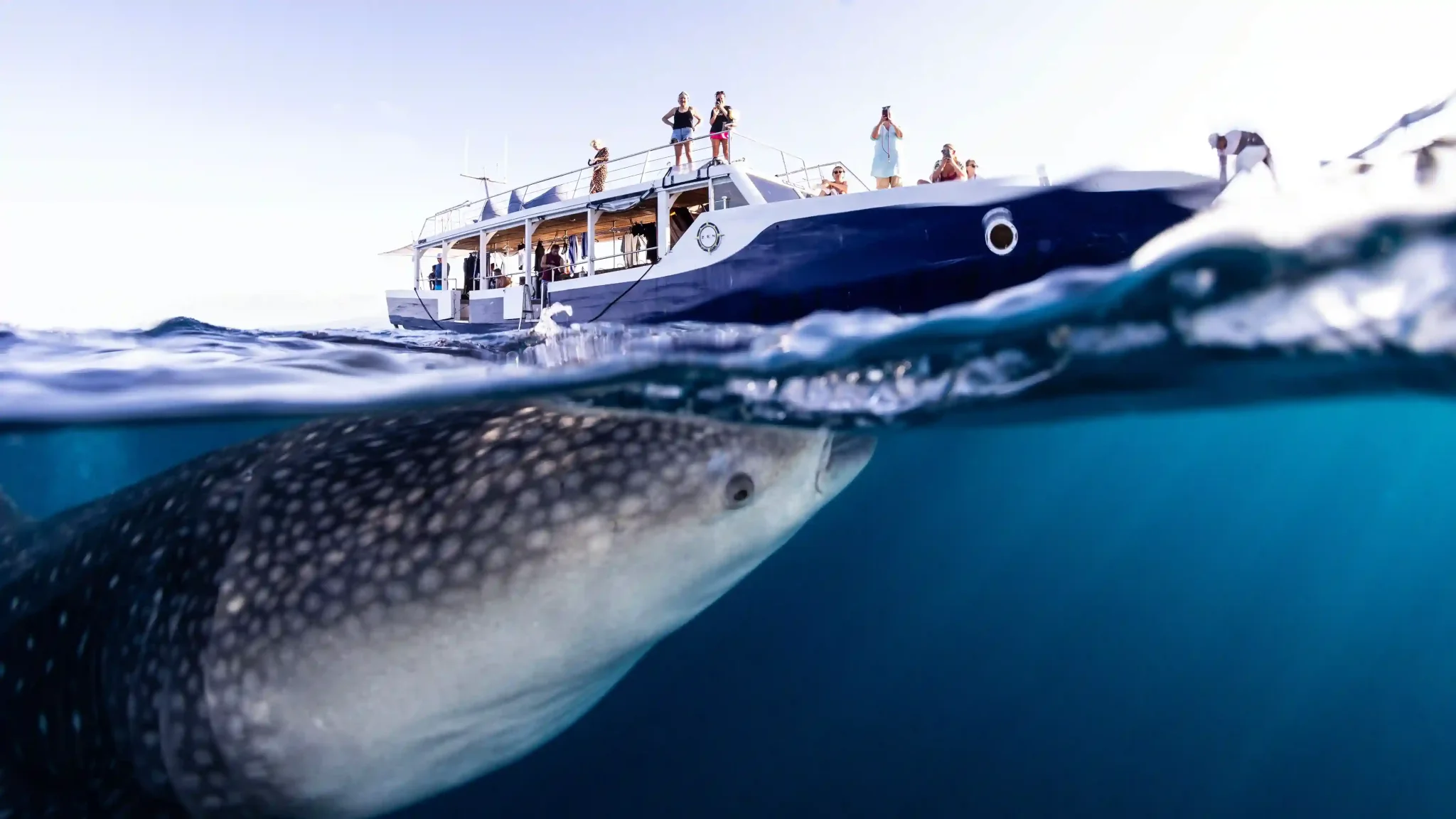
- Prioritize vessels with a low guest-to-guide ratio and extensive experience in the bay.
- Look for itineraries of 9-11 nights to maximize time with the sharks and explore the region’s wrecks and reefs.
- Select operators with proven commitments to sustainable tourism and partnerships with local communities.
The pre-dawn air is thick with salt and anticipation. Below, the Celebes Sea is a sheet of polished obsidian, mirroring a sky just beginning to blush at the edges. Your vessel, a magnificent wooden Phinisi, glides silently towards a constellation of lights on the horizon. These are the bagans, the traditional fishing platforms that hold the key to one of the planet’s most extraordinary wildlife encounters. As the sun’s first rays slice across the water, a colossal, spotted silhouette materializes from the cobalt depths. It ascends not with the speed of a predator, but with the gentle grace of a titan. This is not a fleeting, lucky glimpse. In Cenderawasih Bay, this is a daily, near-guaranteed audience with the ocean’s largest fish, and a luxury liveaboard is your non-negotiable ticket to the show. (See Conservation International — Cenderawasih for context.)
Decoding the Cenderawasih Bay Anomaly
To understand why a liveaboard is the only way to truly experience the whale sharks in cenderawasih bay, one must first grasp why this location is globally unique. Unlike other whale shark hotspots where sightings are seasonal and often brief, the population here is largely resident. They do not migrate through; they have made this vast, sheltered bay their home. The reason lies in a remarkable symbiotic relationship with the local fishermen and their bagans. These floating platforms use massive nets to catch ikan puri, or silver-sided baitfish. For decades, the whale sharks have learned that the fishermen often discard or accidentally spill small portions of their catch, providing an easy and reliable food source. The fishermen, in turn, consider the sharks a sign of good fortune and willingly share their bounty. This interaction, a beautiful dance of man and nature, means the sharks spend hours at the surface, feeding vertically with their mouths agape, offering unparalleled opportunities for observation. The entire spectacle unfolds within the protected waters of Teluk Cenderawasih National Park, Indonesia’s largest marine national park, covering a staggering 14,535 square kilometers. This immense scale and unique behavior, which led to its submission on the UNESCO World Heritage Tentative List, makes the region virtually inaccessible to day-trippers, cementing the liveaboard’s role as the essential platform for exploration.
The Phinisi Experience: Why a Liveaboard is Essential
Forget land-based resorts and day boats; the sheer remoteness and scale of Cenderawasih Bay demand a more immersive approach. The vessel of choice in these waters is the Phinisi, a traditional Indonesian two-masted sailing ship, masterfully re-imagined as a floating boutique hotel. These are not merely transport; they are an integral part of the experience. Aboard a top-tier Phinisi, your day is not dictated by return times to a distant port. Instead, you wake up mere meters from the bagans, ready to slip into the water as the sharks begin their morning ritual. The benefits are absolute: you maximize water time, enjoy multiple encounters per day, and avoid any other tourist traffic. Life on board is a seamless blend of adventure and comfort. Gourmet meals are prepared by skilled chefs, expert dive masters with years of local experience lead every excursion, and five-star service ensures every need is met. Itineraries typically span from 9 to 11 nights, allowing ample time not just for the sharks, but also for exploring the bay’s other secrets, from pristine coral gardens to forgotten WWII wrecks. This unparalleled access is what makes exploring Cenderawasih Bay’s unique whale shark population a truly once-in-a-lifetime experience. The investment, often starting around $600 per person per night, reflects this exclusivity and the complex logistics of operating at such a high standard in one of the world’s most remote marine environments.
The Vanguard of Luxury: The Damai Fleet
When the conversation turns to uncompromising luxury in Indonesian waters, the Damai I and Damai II are consistently at the forefront. These two sister vessels, custom-built from the ground up specifically for diving, represent the pinnacle of the liveaboard experience. At 40 meters in length, they accommodate a maximum of 12 guests, ensuring an atmosphere of intimacy and personalized service that is hard to match. The cabins are exceptionally spacious, with some master suites exceeding 40 square meters and featuring private balconies. What truly sets the Damai fleet apart, however, is their unwavering focus on the diving experience. They are renowned for their 4:1 guest-to-guide ratio, a figure that guarantees individual attention and safety. For photographers, the onboard camera facilities are second to none, with dedicated rinse tanks and workstations. “On the Damai, we don’t just find the sharks; we become part of their morning routine,” explained one of their veteran cruise directors on a recent trip. Their Cenderawasih itineraries are meticulously planned, often allocating three full days to the whale shark areas around Kwatisore Bay before venturing to explore the lesser-known reefs of the region. The all-inclusive pricing, typically ranging from $800 to $950 per person, per night, reflects a standard where every detail, from the complimentary massages to the fine wines served with dinner, has been thoughtfully considered.
The Boutique Explorer: The Dewi Nusantara
If the Damai represents modern, purpose-built luxury, the Dewi Nusantara embodies the romance and grandeur of a bygone era of exploration. This majestic 58-meter, three-masted schooner is, by any measure, one of the most beautiful vessels plying the waters of the Coral Triangle. Her sheer size provides exceptional stability and an incredible amount of space for the 18 guests she accommodates. The heart of the ship is the master and commander suite, a palatial cabin located in the stern with 180-degree panoramic windows that is, without exaggeration, one of the most coveted berths in the liveaboard world. The Dewi Nusantara’s approach to whale sharks in Cenderawasih Bay is one of deep immersion. Her 11-night itineraries are designed not as a fleeting visit but as a comprehensive survey of the bay’s complete ecosystem. Beyond the whale sharks, dives are focused on the remarkable collection of WWII wrecks scattered near Manokwari and Biak. Divers can explore perfectly preserved P-47 Thunderbolt fighter planes and Japanese patrol boats, all resting in relatively shallow, clear water. According to local dive historians, the bay is a graveyard for at least 20 documented wartime wrecks. This dual focus makes the Dewi Nusantara an exceptional choice for those who want their cetacean encounters balanced with compelling historical dives and explorations of the bay’s vibrant macro life, all from a platform of classic, elegant luxury.
The Pioneering Spirit: The Pindito
In an industry with many new entrants, there is something to be said for experience. The MV Pindito is a legend in Indonesian liveaboard diving, having pioneered many of the routes now considered classics. Operating since 1992 under the steady hand of its owner, Edi Frommenwiler, the Pindito offers an experience grounded in authenticity and an unparalleled depth of local knowledge. While not as overtly opulent as some of its contemporaries, the Pindito provides a level of comfort and efficiency that has earned it a fiercely loyal following of serious divers and photographers. The vessel has been refitted multiple times, most recently in 2016, to maintain modern standards. What truly defines the Pindito is its crew, many of whom have been with the boat for over a decade. Their relationships with the bagan fishermen are not transactional; they are built on years of mutual respect. This translates into a more organic and insightful whale shark experience for guests. The Pindito’s itineraries are expeditionary in nature, often exploring corners of the bay that other boats overlook. As noted by Indonesia’s official tourism board, responsible interaction is key to preserving this unique environment, a principle the Pindito has championed for over 30 years. For the traveler who values substance over style and deep expertise over superficial luxury, the Pindito remains an outstanding and highly respected choice.
Quick FAQ on Cenderawasih Bay Liveaboards
Is diving certification required to see the whale sharks?
Not strictly for the sharks themselves. The primary encounters happen at the surface as the sharks feed, making it an incredible experience for snorkelers. However, to explore the bay’s full spectrum of offerings, including its vibrant reefs and historical WWII wrecks, a PADI Open Water certification or equivalent is essential. Virtually all liveaboards require guests to be certified divers.
How much does a Cenderawasih Bay liveaboard trip cost?
For a premium, 10- or 11-night liveaboard experience, travelers should budget between $7,000 and $11,000 per person. This typically includes accommodation, all meals, diving activities, and park and port fees, but excludes international flights, dive gear rental on some vessels, and crew gratuities.
What makes the whale sharks here so different from other locations?
The key difference is behavioral. The Cenderawasih Bay whale sharks are a non-migratory, resident population. They have developed a unique, learned behavior of feeding on baitfish spilled from the local fishermen’s bagan platforms. This results in predictable, reliable, and exceptionally close encounters that can last for hours at a time, a phenomenon not seen anywhere else on this scale.
When is the best time to visit Cenderawasih Bay?
While the whale sharks are present year-round, the optimal travel season is during the calmer, drier months from June to October. This period generally offers the flattest seas and sunniest weather, making for ideal surface conditions. This conveniently contrasts with the peak season for nearby Raja Ampat (October to April), allowing for year-round diving in West Papua.
Choosing the right vessel is the critical first step in crafting an unforgettable encounter with these gentle giants. It is the platform that transforms a simple holiday into a genuine expedition. From the bespoke service of the Damai fleet to the classic elegance of the Dewi Nusantara, the perfect liveaboard serves as your key to unlocking one of the ocean’s last, great, intimate wildlife spectacles. To begin charting your own journey into the heart of this Indonesian jewel, explore our comprehensive guides to cenderawasih bay and discover a world where giants still roam the sea.