
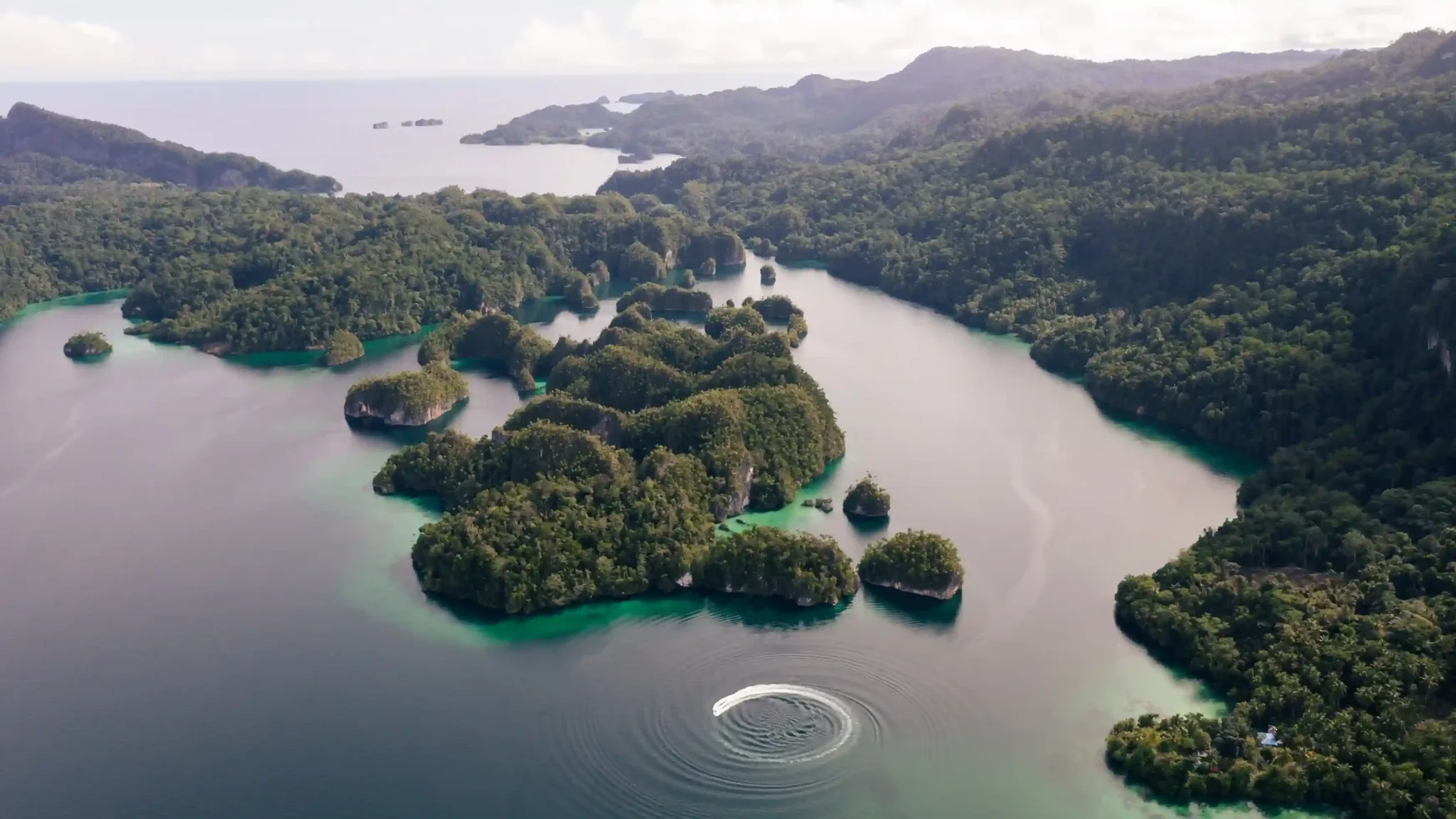
- Expect water temperatures averaging a consistent 29°C (84°F), perfect for long snorkeling and diving sessions.
- Marine visibility frequently extends beyond 25 meters, enhancing both whale shark encounters and reef exploration.
- It is a prime period for liveaboard charters, with smoother surface conditions for navigating to the park’s remote atolls.
The low, rhythmic hum of the phinisi’s diesel engine is the only sound that breaks the pre-dawn stillness. A faint scent of clove and salt hangs in the humid air as the sky bleeds from inky black to a soft, bruised purple over the glassy surface of the bay. Below, in the deep turquoise, a constellation of white spots resolves into the immense, patterned back of a whale shark. It rises slowly, deliberately, its cavernous mouth agape. This is the daily ritual in Cenderawasih Bay, and in October, the stage is perfectly set for one of the planet’s most profound wildlife encounters.
Why October? Decoding the Shoulder Season Advantage
Seasonality is everything in remote archipelago travel, and for a Cenderawasih National Park tour, October presents a particularly compelling proposition. This month marks the transition out of the southeast monsoon winds that can bring choppier seas from June through September. The result is a period of relative calm, an inter-monsoon window before the northwest winds begin to stir in late November. For the traveler, this translates to smoother sailing between islands, making the long passages required to explore the park’s vast expanse far more comfortable. It’s a critical factor when your primary mode of transport and accommodation is a liveaboard vessel navigating a marine park that spans an immense 14,535 square kilometers.
The climate metrics for October are consistently favorable. Air temperatures hover between 30-32°C (86-90°F), while the water remains a welcoming 29°C (84°F). Critically, this is one of the drier months in West Papua, with rainfall significantly lower than during the peak wet season. This clarity extends below the surface. According to our lead dive guide, Kadek, who has logged over 2,000 dives in these waters, “October and November often give us the best visibility of the year, frequently pushing past 30 meters. The plankton bloom that can cloud the water in other months has subsided, but there’s still more than enough to keep the whale sharks concentrated around the fishing platforms.” This combination of calm seas, clear skies, and crystalline water creates an optimal environment for both underwater photography and simply appreciating the sheer scale of the marine life here.
The Whale Shark Phenomenon: A Unique Symbiosis
The primary draw for any visitor to this region is, without question, the whale sharks. Unlike other global aggregation sites tied to seasonal spawning events, the whale sharks of Cenderawasih Bay are year-round residents. This remarkable consistency is due to a unique, symbiotic relationship with the local fishermen and their floating fishing platforms, known as bagans. For decades, these fishermen have been tossing a portion of their ikan puri (small baitfish) catch to the sharks, which they believe brings good luck. The sharks, in turn, have learned to associate the sound of the bagan generators with an easy meal, gathering beneath the platforms each morning.
An encounter here is unlike any other. Our mornings began before sunrise, with a short tender ride to a designated bagan. The scene is surreal: a rickety wooden structure floating in the middle of a vast, empty bay, with the silhouettes of several 4 to 8-meter-long juvenile male sharks circling beneath. As the fishermen begin their work, the sharks respond. They feed vertically, their heads breaking the surface just meters from the platform, mouths wide open to receive the offered fish. For snorkelers, this provides an unparalleled opportunity to observe these gentle giants in a calm, predictable setting, free from the chaotic scrum of boats found at other tourist-heavy sites. A well-managed Cenderawasih National Park tour ensures that interactions are respectful, with strict guidelines on proximity and behavior to minimize disturbance. This reliable, year-round access is what makes a cenderawasih bay experience so distinct from other global whale shark hotspots.
Beyond the Giants: Endemic Reefs and Sunken History
While the whale sharks are the headliners, the supporting cast of marine life and underwater topography is equally impressive. Cenderawasih Bay’s unique geography—a semi-enclosed body of water with a deep sill—has made its reefs remarkably resilient. They were largely spared from the coral bleaching events of 1998 and 2016 that devastated reefs elsewhere in the Coral Triangle. The result is a seascape of vibrant, healthy hard and soft corals, with over 500 documented species. The park is a hotbed of evolution, home to a number of endemic species found nowhere else on Earth. On our dives near Pulau Roon, we were fortunate enough to spot the Cenderawasih walking shark (Hemiscyllium galei), which uses its pectoral fins to “walk” across the seabed.
The bay also holds a significant collection of World War II history. Its protected waters served as a staging area for Allied forces, and the seabed is littered with remarkably preserved wrecks. Off the coast of Manokwari, divers can explore several Japanese cargo ships. Further into the park, near Roon Island, lies a P-47D Thunderbolt fighter plane, sitting upright in just 18 meters of water, its cockpit and wings largely intact and now encrusted with coral. Another notable site is the Shinwa Maru, a 120-meter-long Japanese freighter. Exploring these historical artifacts, now transformed into artificial reefs teeming with life, adds a profound layer to any diving itinerary. The sheer diversity of experiences, from pelagic giants to macro critters and historical wrecks, solidifies the park’s reputation as a world-class marine destination.
Choosing Your Vessel: The Liveaboard Imperative
The sheer scale and remoteness of Cenderawasih National Park make a land-based visit impractical for comprehensive exploration. The only effective way to access the premier whale shark sites, pristine reefs, and WWII wrecks is via a dedicated liveaboard vessel. In October, with calm seas assured, the journey becomes part of the destination. The fleet operating in these waters is dominated by two styles of vessel: the traditional Indonesian Phinisi schooner and the modern steel-hulled motor yacht. Phinisis, handcrafted from ironwood and teak, offer a romantic, classic sailing experience, while modern yachts provide more spacious cabins and advanced amenities. A high-end 8-night private charter can range from $40,000 to over $90,000, inclusive of a full crew, private chef, and expert dive guides.
A typical itinerary for a **cenderawasih national park tour** lasts between 7 and 11 nights, usually embarking from the port towns of Nabire or Manokwari. The extended duration is necessary to cover the significant distances between key areas, such as the whale shark aggregations in the Kwatisore region and the wreck-diving sites further north. Life aboard settles into a comfortable rhythm: an early morning whale shark snorkel, a post-breakfast dive on a vibrant reef, lunch during a leisurely cruise to a new anchorage, an afternoon wreck dive or village visit, and dinner under the stars. The level of service is exceptional, with crews adept at anticipating every need. Planning a comprehensive Cenderawasih National Park tour requires this level of expert logistical support, as permits, provisions, and navigation in these remote waters are complex undertakings.
Onshore Excursions: Culture and Avian Wonders
While the primary focus is marine, the “tanah” (land) of Papua offers its own compelling rewards. The park encompasses 18 major islands and a long stretch of mainland coastline, home to small, traditional villages. A visit to a village on Pulau Roon or in the Auri Islands provides a brief but meaningful glimpse into the lives of the Biak people, the region’s primary ethnic group. These visits are typically low-key affairs, involving a walk through the village, a look at the local church, and perhaps purchasing handmade crafts. It’s a welcome opportunity to stretch your legs and connect with the human element of this remote place.
The park’s name, Cenderawasih, translates to “Bird of Paradise,” and for good reason. The adjacent mainland forests of the Wandammen Peninsula are home to several of these spectacular, almost mythical birds. While spotting them requires a dedicated, early-morning trek into the jungle with a local guide, the payoff is immense. Witnessing the elaborate courtship dance of a Wilson’s Bird of Paradise or a Lesser Bird of Paradise is an experience that rivals the whale sharks in its rarity and beauty. According to the official Indonesia.travel portal, West Papua is one of the world’s most biodiverse regions, both above and below the water. The park’s incredible natural and cultural value has earned it a place on UNESCO’s Tentative List for World Heritage status, a testament to its global significance.
Quick FAQ: Your October Cenderawasih Tour
What permits are required for the park? A marine park entrance permit, locally known as a PIN, is mandatory for all visitors. The cost is approximately IDR 1,000,000 (about $65 USD) per person for foreign nationals and is valid for one year. Your liveaboard operator will almost always arrange this on your behalf prior to your arrival.
Is diving experience necessary to see the whale sharks? Absolutely not. The whale shark interactions around the bagans are best experienced while snorkeling or freediving. The sharks feed at or just below the surface, making it an incredibly accessible activity for anyone who is comfortable in the water. Most liveaboards offer introductory dives for non-certified guests who wish to explore the reefs.
What should I pack for an October trip? Pack for a tropical marine environment. Essentials include lightweight, quick-drying clothing, multiple swimsuits, a wide-brimmed hat, polarized sunglasses, and a high-SPF, reef-safe sunscreen. For the water, a 3mm wetsuit or a rash guard and leggings are recommended for sun and jellyfish protection. Bring a good insect repellent for any shore excursions, especially for birdwatching treks.
How do I get to the embarkation points? The main gateways to Cenderawasih Bay are the airports in Manokwari (MKW) and Nabire (NBX). There are no direct international flights. Travelers must connect through major Indonesian hubs such as Jakarta (CGK), Denpasar (DPS), or Makassar (UPG). Garuda Indonesia and Lion Air/Batik Air are the primary domestic carriers serving these routes.
An October expedition into Cenderawasih Bay is an investment in rarity. It is a journey to a place where nature operates on a grand, primal scale, and where human interaction remains, for now, a symbiotic curiosity rather than a disruptive force. The combination of placid seas, clear water, and the planet’s most reliable gathering of whale sharks creates a travel experience that is both deeply moving and profoundly exclusive. To craft your own bespoke journey into this remote paradise, explore our curated expeditions and connect with our travel specialists at cenderawasih bay.