
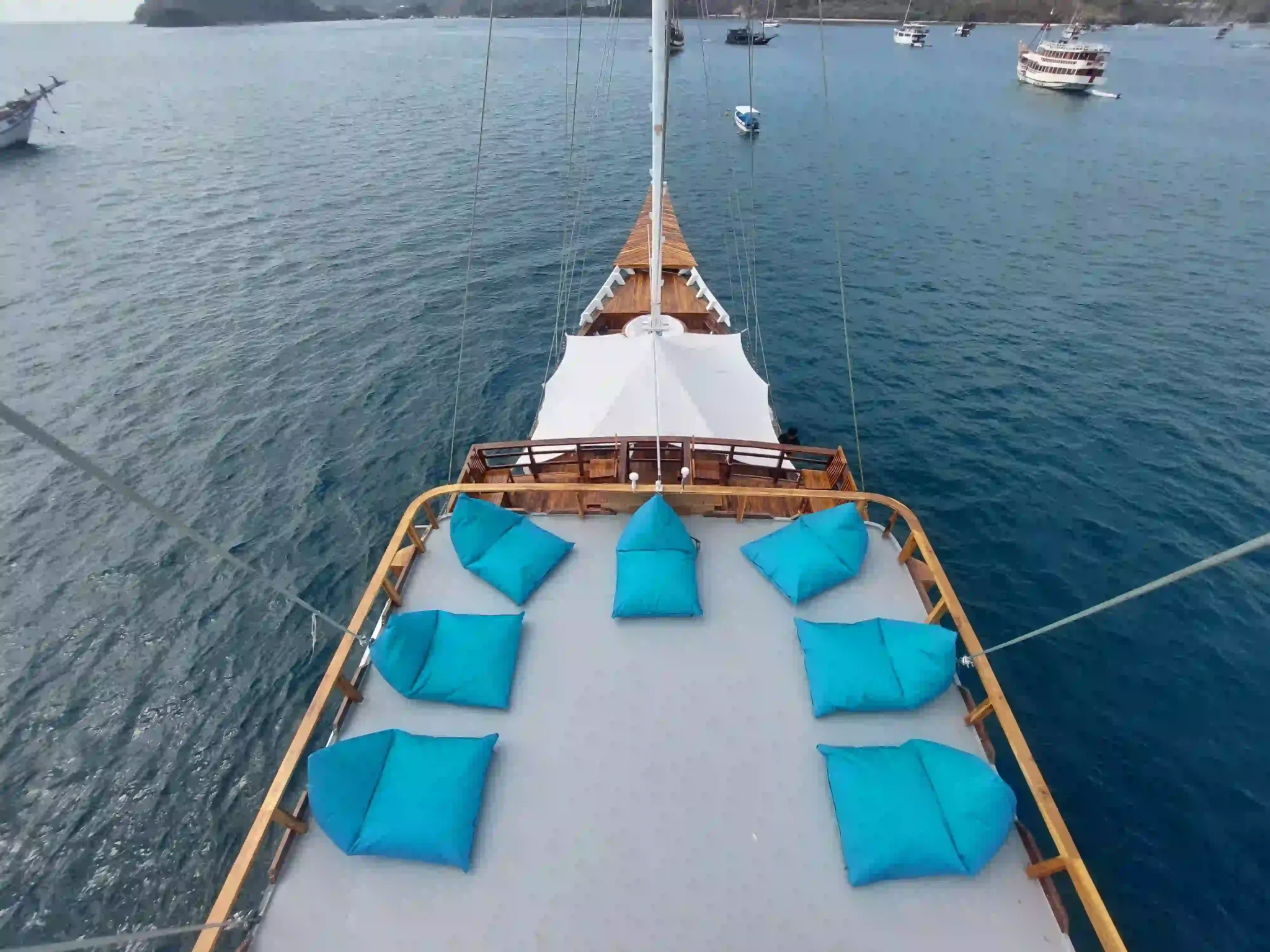
- Vessel Class: The ultimate cost is dictated by the vessel, from opulent traditional Phinisi schooners to modern, expedition-style motor yachts.
- Inclusions: Fares typically cover accommodations, gourmet meals, diving, and expert guides, but exclude flights, park fees, and gratuities.
- Charter Type: Full private charters offer exclusivity and can cost upwards of $80,000 per week, though the per-person rate can be competitive for larger groups.
The low hum of the generator is a distant, reassuring rhythm. Below, in the impossibly clear water, a constellation of silver baitfish shifts and glitters, parting for the colossal, star-dusted shadow of a whale shark. It glides past your mask, its eye as large as a dinner plate, ancient and unconcerned. This is not a fleeting encounter; this is a Tuesday morning in West Papua. For the discerning traveler, the question isn’t whether to experience this, but rather, what is the real investment for such a profound communion with nature? The cost of a luxury liveaboard trip cenderawasih is more than a line item; it’s the price of admission to one of the planet’s last, truly wild marine sanctuaries. (See Conservation International — Cenderawasih for context.)
Deconstructing the Price Tag: What’s Included in a Six-Figure Charter?
At the apex of Indonesian marine travel, the private charter is the ultimate expression of freedom and exclusivity. When you see price tags floating between $80,000 and $150,000 per week, it’s essential to understand the world-class service architecture that figure supports. We’re talking about vessels like the 51-meter Dunia Baru or the palatial 65-meter Prana by Atzaró, which are less boats and more floating boutique resorts. A full charter fee for a vessel of this caliber, accommodating 12-18 guests, includes the entire crew—a captain, cruise director, engineers, multiple dive masters, a private chef, and several stewards, often resulting in a crew-to-guest ratio exceeding 1:1. Every meal is a bespoke culinary event, tailored to your group’s preferences. All non-alcoholic beverages, daily diving, use of water toys like kayaks and paddleboards, and fuel for the planned itinerary are standard inclusions. What this figure does not cover are the incidentals that complete the journey. International and domestic flights, mandatory national park and port fees (which can run between $250 and $400 per person), premium alcoholic beverages, and crew gratuity—customarily 10-15% of the charter fee—are budgeted separately. For a $100,000 charter, this means preparing for an additional $10,000 to $15,000 in cash for the crew’s exceptional service.
The Sweet Spot: Per-Cabin Luxury on Scheduled Departures
For individuals, couples, or smaller groups, the most accessible path to luxury is booking a cabin on a scheduled departure. This tier of travel is where most discerning divers find their perfect balance of comfort, service, and value. The nightly per-person rate on a top-tier vessel generally falls between $700 and $1,200. For a typical 10-night expedition through Cenderawasih Bay, the total investment per person will land in the $7,000 to $12,000 range. Vessels in this category, such as the esteemed Damai I or the beautifully crafted Arenui, are renowned for their meticulous service and deep regional expertise. You are not merely a passenger; you are a guest explorer. Cabins are spacious, air-conditioned sanctuaries with private ensuite bathrooms. The dive operations are seamless, with personal gear storage, camera rooms, and small guide-to-diver ratios, often 1 guide for every 4 divers. These trips are curated by cruise directors who have spent years decoding the bay’s secrets. Most itineraries span 9 to 11 nights, a duration required to properly explore the vast 14,535-square-kilometer Cenderawasih Bay National Park, a protected area detailed by Indonesia’s official tourism board. This ensures ample time not just for the famous whale sharks but also for the region’s unique WWII wrecks and endemic marine life.
Vessel Class and Itinerary: The Two Biggest Cost Drivers
The character of your vessel profoundly shapes both your experience and your budget. The iconic Indonesian Phinisi, a traditional two-masted wooden schooner, offers an authentic, romantic connection to the archipelago’s maritime heritage. The art of Phinisi boatbuilding itself is recognized as a Masterpiece of the Oral and Intangible Heritage of Humanity by UNESCO. These vessels range from the elegantly rustic to the unabashedly opulent, with larger, newer Phinisis featuring amenities rivaling any five-star hotel. In contrast, modern steel-hulled or aluminum motor yachts often provide greater stability, faster cruising speeds, and more contemporary interior design. A 40-meter Phinisi might cruise at 8 knots, while a motor yacht could cover the same distance more quickly, allowing for more varied dive sites. The itinerary is the second major variable. A classic liveaboard trip cenderawasih focuses exclusively on the bay, departing from Manokwari or Nabire. However, some of the most sought-after (and expensive) trips are “cross-over” or “repositioning” voyages. These epic 12- to 14-night journeys connect Cenderawasih Bay with Raja Ampat, navigating hundreds of nautical miles. The transit from Sorong to Manokwari alone can take over 24 hours of continuous sailing, significantly increasing fuel costs and the overall trip price, but offering an unparalleled survey of West Papua’s diverse marine ecosystems.
Beyond the Sticker Price: Ancillary Costs to Budget For
A savvy traveler knows the listed charter price is just the beginning. The largest ancillary cost is invariably air travel. Reaching this remote corner of the world requires a multi-leg journey, typically from your international hub to Jakarta (CGK) and then onward via a domestic carrier like Garuda Indonesia or Batik Air to a Papuan gateway city like Manokwari (MKW). Budgeting $2,000 to $3,500 per person for round-trip flights from North America or Europe is a realistic starting point. Once on board, you’ll encounter the National Park and Port Fees. Operators bundle these government-mandated charges, which typically amount to $250-$400 per person, payable on the vessel. While most high-end boats include standard dive gear, specialized equipment often incurs extra fees. Nitrox, which allows for longer bottom times and is highly recommended for multi-dive days, usually costs an additional $150-$250 for a 10-day trip. Comprehensive travel and dive insurance, including emergency medical evacuation, is mandatory on all reputable liveaboards. Given the region’s remoteness—the nearest recompression chamber is hours away—this is a non-negotiable expense, typically costing between $150 and $500 depending on the policy. Finally, as mentioned, crew gratuity is a significant consideration. The crew works tirelessly, from pre-dawn preparations to post-dinner service, and the customary 10-15% tip reflects their commitment to creating a flawless expedition.
Is It Worth It? An Editor’s Perspective on Value
When you compare a $10,000 Cenderawasih expedition to other elite wildlife travel, its value becomes clear. A top-tier safari in Botswana’s Okavango Delta can easily command $2,000 per person, per night. A week-long cruise in the Galapagos on a comparable luxury vessel often exceeds $12,000. What Cenderawasih Bay: Year-Round Whale Sharks in Papua, Indonesia offers is something utterly unique: predictable, intimate, and extended encounters with the world’s largest fish. The whale sharks here are resident, drawn to the fishing platforms known as *bagans*, where they feed on small fish that slip from the nets. This symbiotic relationship, found nowhere else, allows for interactions that are measured in hours, not minutes. Alex Thornton, a veteran cruise director I’ve known for years, put it best over a satellite call last season: “You can’t put a price on seeing a 12-meter shark appear out of the blue, completely unbothered by your presence. It recalibrates your sense of place in the world.” Beyond the sharks, the bay is a crucible of evolution, with dozens of endemic species. As the scientific community has noted, its relative isolation has created a distinct marine ecosystem. This isn’t just a dive trip; it’s an investment in a rare and transformative experience, a chance to witness a corner of the ocean that still operates on its own terms.
Quick FAQ: Your Cenderawasih Cost Questions Answered
When is the cheapest time to book a liveaboard trip cenderawasih?
A: The term “cheapest” is relative in this luxury niche. Unlike highly seasonal destinations, Cenderawasih Bay offers year-round access to whale sharks, leading to more stable pricing. You may find occasional deals during shoulder months like May or October, or on last-minute cabin openings. However, the primary cost factor is always the vessel’s tier and reputation, not the time of year. Don’t expect dramatic low-season discounts on premier boats.
Are private charters more cost-effective for groups?
A: Absolutely. For a family or group of friends that can fill a vessel (typically 10-16 guests), a private charter is often the smartest financial choice. For example, a $96,000 per week charter for 12 guests breaks down to $8,000 per person. This is highly competitive with, and sometimes even less than, the per-cabin rate on a comparable luxury liveaboard, with the immeasurable bonus of total privacy and a fully customized itinerary.
Do I need to bring cash, and how much?
A: Yes, cash is essential. Onboard satellite internet is unreliable for credit card transactions. You will need cash, preferably clean US dollars, for all ancillary onboard payments. This includes port/park fees ($250-$400), potential Nitrox or gear rentals ($150+), premium alcoholic beverages, and most importantly, the crew gratuity (10-15% of your trip cost). A safe budget is $1,500 to $2,500 in cash per person for a 10-night trip.
The journey to the “Bird’s Head Seascape” of West Papua is an undertaking, and the financial commitment is significant. But it is an investment in rarity. It is the price of silence, of discovery, and of witnessing a spectacle of nature so profound it borders on the spiritual. This is not a vacation; it is an expedition to the heart of the ocean’s last frontier. To begin planning your own journey into this remarkable world, explore the unparalleled itineraries available in cenderawasih bay.