The question we hear most from mixed groups planning a Papua trip is simple: can you snorkel with whale sharks in Cenderawasih Bay? Yes — snorkeling is the default way most visitors meet the whale sharks at the Kwatisore bagans, it requires no certification, and as of 2026 it remains permitted under the national park’s standard interaction guidelines. Scuba diving and freediving are also allowed at the same platforms, so the real decision is not whether you can get in the water, but which format matches your training, your comfort level, and the kind of encounter you want.
This guide walks through what each of the three formats actually feels like at the bagans — the lift-net fishing platforms where Teluk Cenderawasih’s whale sharks gather — plus the certification requirements for each, and which trip format suits which traveler. Teluk Cenderawasih is Indonesia’s largest marine national park, and the Kwatisore aggregation is active nearly year-round, which is why it draws snorkelers, divers, and freedivers in roughly equal numbers.
Can You Snorkel With Whale Sharks in Cenderawasih Bay?
Yes. Snorkeling is not a downgrade here — in many ways it is the signature Cenderawasih encounter. The whale sharks at Kwatisore rise to the bagans to feed on the small baitfish held in the fishermen’s nets, which means most of the action happens in the top few meters of water. A snorkeler floating quietly at the surface often gets longer, closer, more repeated passes than a diver sitting below, because the sharks keep returning to the nets right at the waterline.
What it feels like: you slip in from the tender beside the platform, the water is usually calm in the morning, and within minutes a shark the size of a minibus glides up beneath you with its mouth at the surface. There is no chasing involved — the animals come to the bagan, not to you. Encounters commonly last much longer than open-ocean whale shark snorkels elsewhere in the world, where a sighting can be a single 40-second sprint.
Requirements are minimal. You need to be a reasonably confident swimmer in open water with mask and fins; no license, no logbook, no prior experience with big animals. Operators carry flotation aids for less confident swimmers, and children who swim well can usually join under close supervision — confirm age policies for your specific boat before booking. If this is your format, our swim with whale sharks trips are built entirely around surface encounters at the bagans.
What Does Scuba Diving With the Whale Sharks Feel Like?
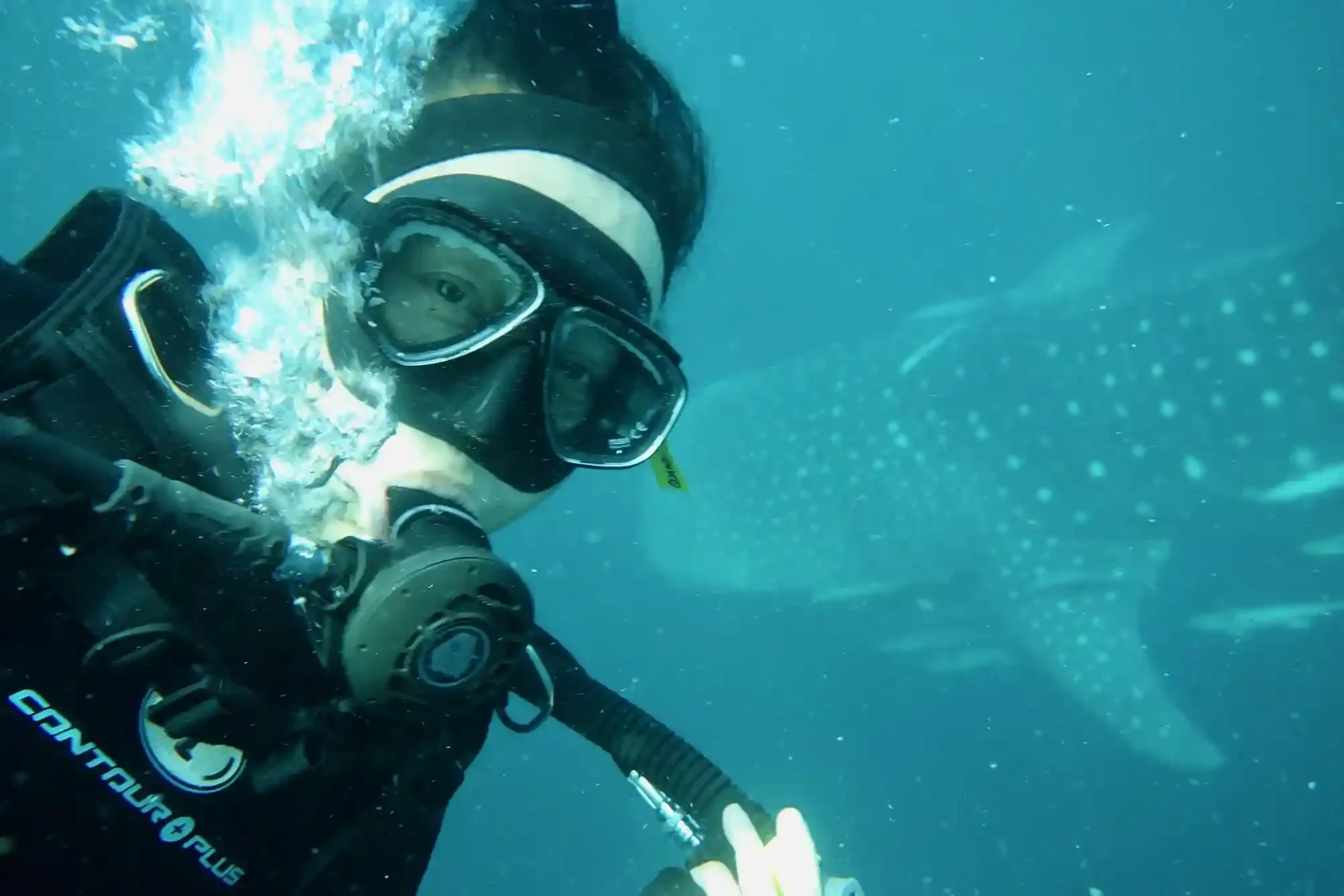
Scuba gives you the perspective snorkelers never see: the full body of the animal from below, framed against the surface light, often with two or three sharks stacked in the water column at once. Because the sharks circle the bagan repeatedly, divers can settle at 5–15 meters and let the encounter come to them — closer to a patient wildlife hide than a swim-along. For underwater photographers, this angle is the reason to bring tanks: the classic upward silhouette shot only exists on scuba.
Certification requirements: a minimum of an entry-level certification such as PADI Open Water Diver or equivalent, from any recognized agency. The bagan encounters themselves are shallow and current-free on most mornings, so newer divers handle them comfortably. Where a higher certification earns its keep is everything around the whale sharks — Cenderawasih’s WWII wrecks, deeper reef walls, and less-sheltered sites reward an Advanced-level card and some logged dives. Full details, site lists, and certification notes are on our Cenderawasih Bay dive trips page.
One honest caveat: if the whale sharks are your only goal, scuba is not strictly necessary. Plenty of certified divers spend their bagan sessions on snorkel anyway, saving the tanks for the reef and wreck dives later in the itinerary.
What About Freediving With Whale Sharks?
Freediving sits between the two: the mobility and silence of snorkeling with the depth and perspective of scuba. A freediver can drop below a passing shark, hold on a single breath while it turns, and surface without a stream of bubbles — which many find produces the calmest, closest animal behavior of all three formats. It is also the format of choice for a growing number of photographers who want the scuba angle without the gear in frame.
There is no legal certification requirement to freedive at the bagans, but this is not the place to learn breath-hold from zero. Responsible operators expect genuine water confidence, ask about your experience, and enforce one-up-one-down buddy protocols; a foundational freediving course (or equivalent demonstrated ability) is strongly recommended before you build a trip around it. Our dedicated freedive expedition departures run with breath-hold-literate guides and schedules shaped around long bagan sessions rather than tank logistics.
Snorkel vs Scuba vs Freedive at the Bagans: Quick Comparison
| Format | Certification needed | Typical encounter depth | Best for | Main limitation |
|---|---|---|---|---|
| Snorkel | None — confident swimming only | Surface to ~3 m | Mixed groups, families, first-timers, long surface encounters | No under-shark perspective |
| Scuba | Open Water minimum; Advanced useful for wrecks and reefs | 5–15 m at the bagans | Certified divers, upward-angle photography, multi-site dive itineraries | Bubbles and gear; least flexible in the water |
| Freedive | No card required; training strongly recommended | Surface to ~15 m on breath-hold | Experienced breath-hold swimmers, natural-light photographers | Highest skill and safety demands |
Which Trip Format Fits Which Traveler?
Most travelers who ask us whether you can snorkel with whale sharks in Cenderawasih Bay are really asking a group question: one person is certified, another is not, a third wants to try freediving. The good news is that because all three formats happen at the same platforms, often on the same morning, the bay is unusually forgiving for mixed groups. A family where one parent dives, the other snorkels, and the teenagers alternate between the two is a normal charter profile here, not a compromise. In practice:
- Non-divers and mixed-ability groups: a snorkel-led itinerary, land-based out of Nabire or on a boat, keeps everyone in the water together. Nobody needs to sit out the headline experience.
- Certified divers: a dive-focused liveaboard or land-based dive package pairs bagan mornings with Cenderawasih’s reefs and wrecks in the afternoons — the format that justifies hauling dive gear to Papua.
- Freedivers and photographers: a freedive-oriented departure with flexible, unhurried bagan time; scuba divers can still join the same boat for the non-bagan sites.
- Families with younger swimmers: surface-only programs with strict supervision; ask us to match you with boats experienced in hosting children.
Access is the same for everyone: fly to Nabire (the closest gateway to Kwatisore) or join a liveaboard routing from Nabire or Manokwari. The aggregation itself is active nearly year-round as of 2026, while liveaboard schedules are seasonal — so land-based trips fill the calendar gaps when boats are positioned elsewhere in Indonesia. Pricing depends on format, boat class, and group size; treat any figure you see online as indicative until it is confirmed against actual departure dates.
Rules That Apply Whether You Snorkel, Dive, or Freedive
The park’s interaction guidelines apply identically across formats, and operators brief them before every session: keep a respectful distance from the animal (guides typically enforce a couple of meters from the body and more from the tail), never touch or ride a shark, no flash photography, and let the guides manage how many guests are in the water at once. The sharks are wild animals feeding at working fishing platforms — the bagan crews’ livelihood and the animals’ behavior both depend on visitors staying disciplined. None of this reduces the encounter; it is precisely why the encounters here stay long and relaxed.
So — Snorkel, Dive, or Freedive?
If you came here asking whether you can snorkel with whale sharks in Cenderawasih Bay, the answer is not just yes — for many travelers it is the best format in the bay, and the only one that requires nothing but swimming ability. Choose scuba if you are certified and want the under-shark perspective plus Cenderawasih’s wider diving; choose freediving if you have real breath-hold experience and want the closest, quietest encounters; choose snorkel-first if your group is mixed or this is your first big-animal trip. And remember the formats combine: most itineraries we arrange include at least two of the three.
Tell us who is in your group and how each person is in the water, and we will recommend the right format and departure — whale shark snorkel trips, dive itineraries, or a freedive expedition. Message us on WhatsApp at +62 811-3941-4563 or email [email protected] and we will map the options against real dates. Part of Juara Holding Group — operating from Bali across Indonesia since 2015.