Cenderawasih Bay Whale Shark Guide: Ethical Encounters, Best Operators, Tour Costs
The complete planning guide to swimming with whale sharks year-round in West Papua’s hidden marine paradise.
Cenderawasih Bay at a Glance
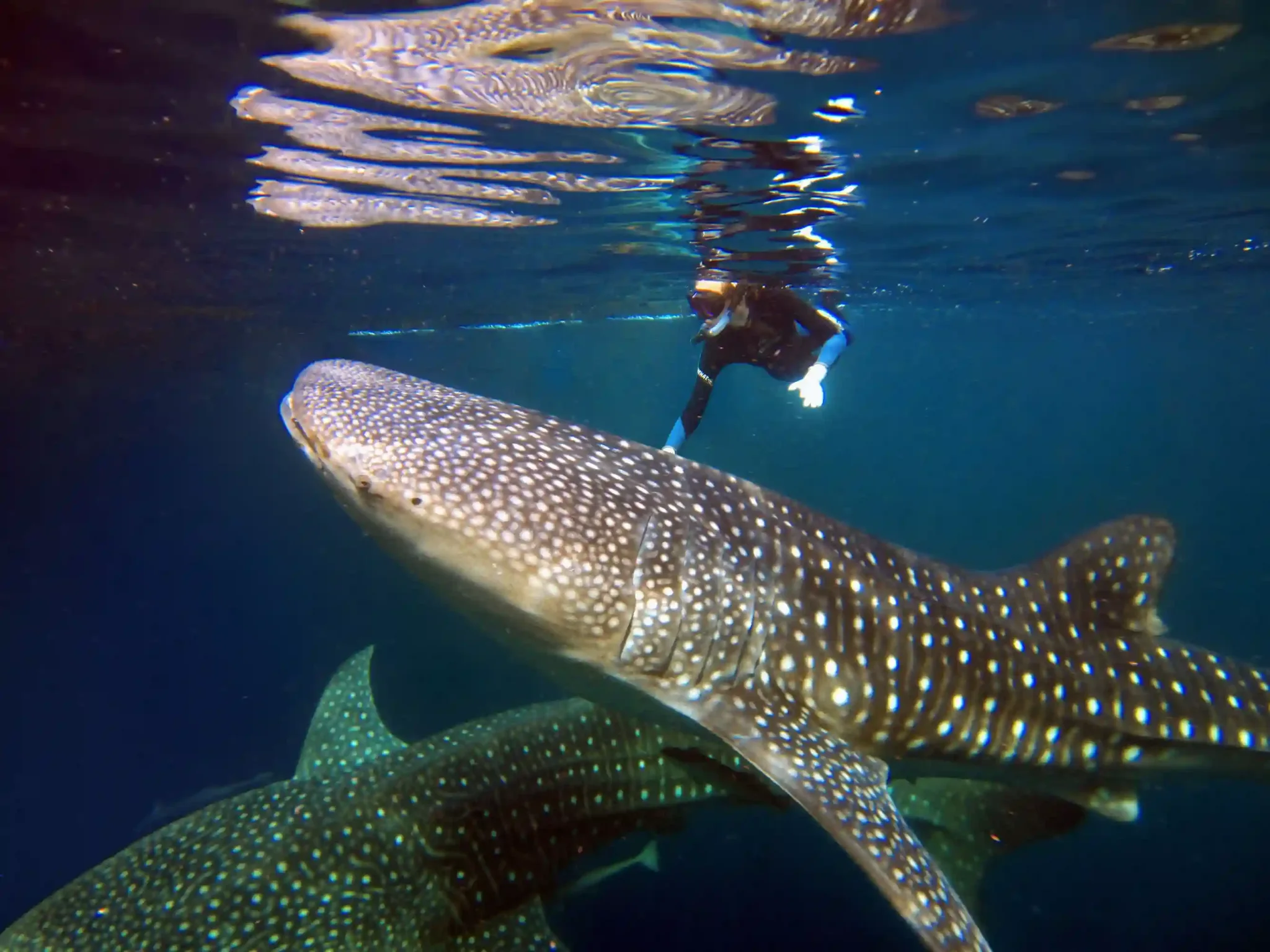
Cenderawasih Bay holds a near-unique distinction in the marine wildlife world: it is the only confirmed location with a resident, year-round, ethically-fed whale shark population that visitors can interact with on demand. While whale shark “season” elsewhere lasts 3-6 months, Cenderawasih encounters happen 12 months a year with reported success rates above 90% on multi-day visits. This guide covers everything serious travelers need to plan a Cenderawasih trip in 2026: how the bagan-feeding interaction works, who the reputable operators are, current 2026 pricing, what alternatives exist, and how the whole experience compares to other major whale shark destinations.
Whale Shark Biology and Why Cenderawasih Works
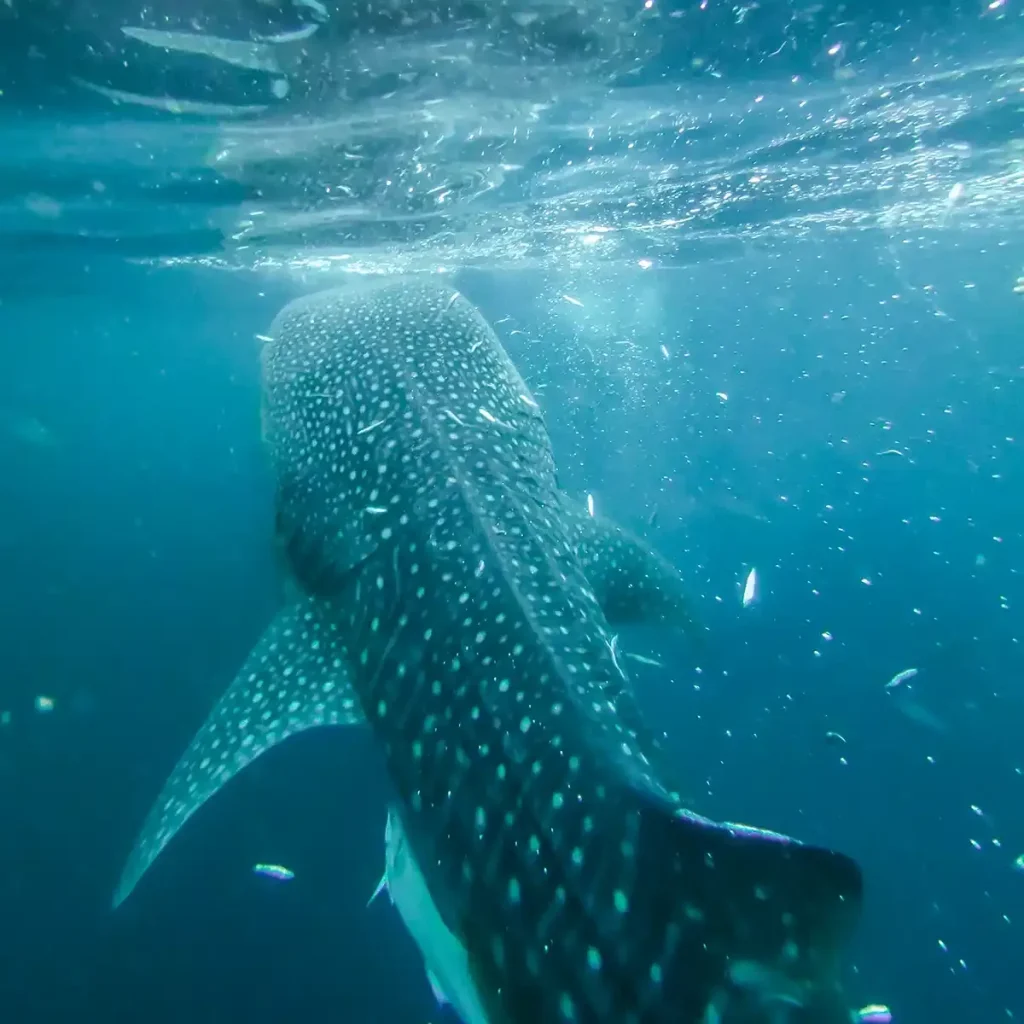
Whale sharks (Rhincodon typus) are the largest fish on Earth, reaching 12 meters in length and 20+ tons in weight. They are filter feeders, consuming tiny baitfish, krill, and plankton via passive suction or active gulping. Most whale shark populations are highly migratory, following plankton blooms and warm currents across thousands of kilometers. The Cenderawasih population behaves differently: photo-identification records (using each shark’s unique spot pattern as a fingerprint) confirm that 60-70% of the documented 180+ individuals show repeat sightings spread across multiple years and seasons. This suggests genuine residency rather than transient migration.
The bagan-feeding behavior appears to have developed organically over decades. Local Papuan fishermen have used bagan platforms since the 1960s. Whale sharks likely began visiting opportunistically, drawn by the concentrated bait fish populations attracted to the platform lights at night. Over generations of sharks, the behavior reinforced into a learned pattern: bagan equals food. Today, the sharks visit predictably, the fishermen toss them small portions of catch as a gesture of welcome (rooted in Papuan animist beliefs that the sharks bring fortune), and tourism operators have layered ethical guidelines on top to prevent the practice from becoming exploitative.
The Ethical Framework: Why This Isn’t Like Oslob
Whale shark tourism is controversial. The Oslob whale shark feeding operation in the Philippines is widely criticized for habituating sharks to handouts, altering migration patterns, and creating dangerous boat-traffic conditions. Cenderawasih is structurally different in important ways:
- The feeding pre-existed tourism by 30+ years. Bagan fishermen toss bait to sharks regardless of whether tourists are present.
- The bait is natural prey (ikan puri baitfish) caught locally, not commercial pellets or unfamiliar food.
- Quantities are small relative to wild diet — supplementary, not substitutional.
- Mandatory operator guidelines: max 6 swimmers per shark, no touching, no flash, no chasing, no scuba within 3 meters of feeding.
- Controlled access: only licensed operators may visit bagans with tourists; the bay is patrolled by park rangers.
- Scientific monitoring: Conservation International maintains the photo-ID database and tracks shark health metrics.
The 2018 IUCN Whale Shark Specialist Group report on Cenderawasih concluded that the operation was “broadly compatible with conservation objectives” provided guidelines remained enforced — a notably positive assessment compared to Oslob, which the same group has called for restructuring.
Reputable Operators: 2026 Comparison
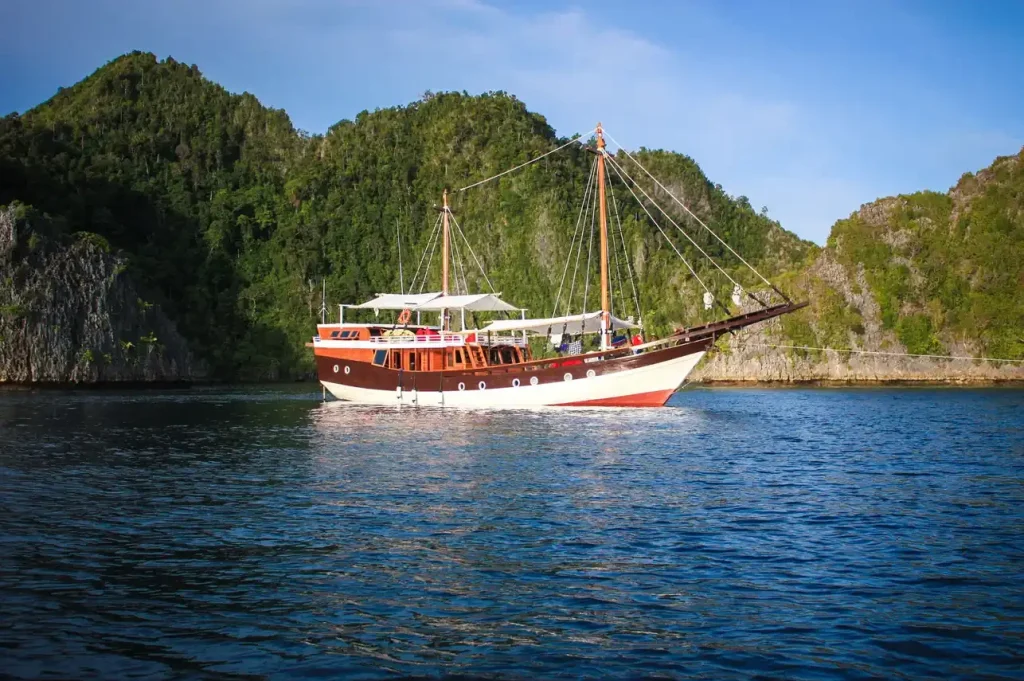
Liveaboard Operators (7-12 night cruises)
- MV Mermaid II — 16-passenger steel hull, $5,800-7,400 for 7 nights. Dedicated Cenderawasih + Raja Ampat itineraries. Strong dive operation, average rooms.
- Calico Jack — 14-passenger phinisi, $4,800-6,500 for 8 nights. Cenderawasih-only options available. Good photographer-focused operation with two dedicated camera tables.
- Damai I & II — 12-passenger luxury phinisi, $7,200-9,500 for 10-12 nights. Combined Cenderawasih-Raja Ampat itineraries. Premium experience, strong guest reviews.
- Pelagian (Wakatobi-affiliated) — 10-passenger expedition vessel, $7,800-9,500 for 10 nights. Conservation-focused, includes scientist briefings. Often booked 12+ months ahead.
- The Junk — 8-passenger boutique phinisi, $4,200-5,500 for 7 nights. Smaller, more intimate experience. Limited annual departures.
Land-Based Operators (Manokwari/Nabire)
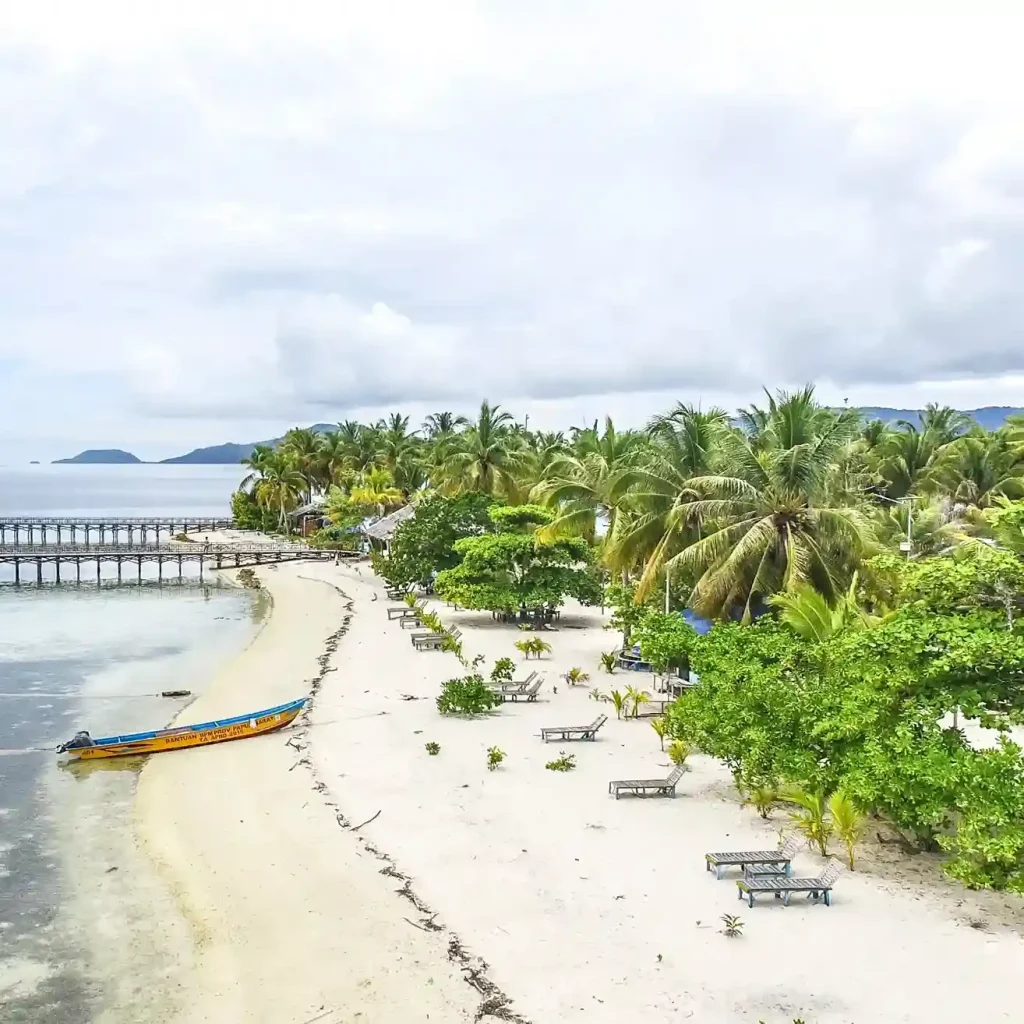
- Kwatisore Homestay (Yenbeser-area villages) — Basic Papuan homestay, $80-150 per person per night including meals and daily bagan boat trips. The most authentic budget option.
- Cenderawasih Bay Tour Co (Manokwari) — 4-night package, $1,200-1,800 per person, includes Manokwari hotel and 3 bagan day trips. Good for solo travelers and short visits.
- Papua Diving Adventures (Nabire) — 6-night package, $2,200-3,200 per person, hotel + dive boat + 4 bagan visits + 2 reef dives. Best value for combination snorkeler-diver visits.
Realistic 2026 Cost Breakdown
Total trip budget for a single traveler from a US/EU origin city, including a 7-10 day Cenderawasih experience:
- International flights to Jakarta or Bali: $1,200-2,400 (West Coast US to Southeast Asia)
- Domestic flights Jakarta/Bali → Manokwari (with one stop): $400-680 round trip
- Liveaboard 7-10 nights: $4,800-9,500 (single supplement +30%) OR Land-based 4-7 nights: $1,200-3,200
- Pre/post Manokwari nights (mid-range hotel): $50-90 per night
- Travel insurance with diving: $80-150
- DAN dive insurance: $40-100 annual
- Visa-on-arrival: $35
- Tipping crew (liveaboards): 5-10% of base price ($240-950)
- Souvenirs and incidentals: $100-300
Total realistic budget: $3,400-13,500 per person depending on liveaboard vs land-based, with most visitors landing in the $7,000-9,500 range for a quality liveaboard experience.
Cenderawasih vs Other Whale Shark Destinations
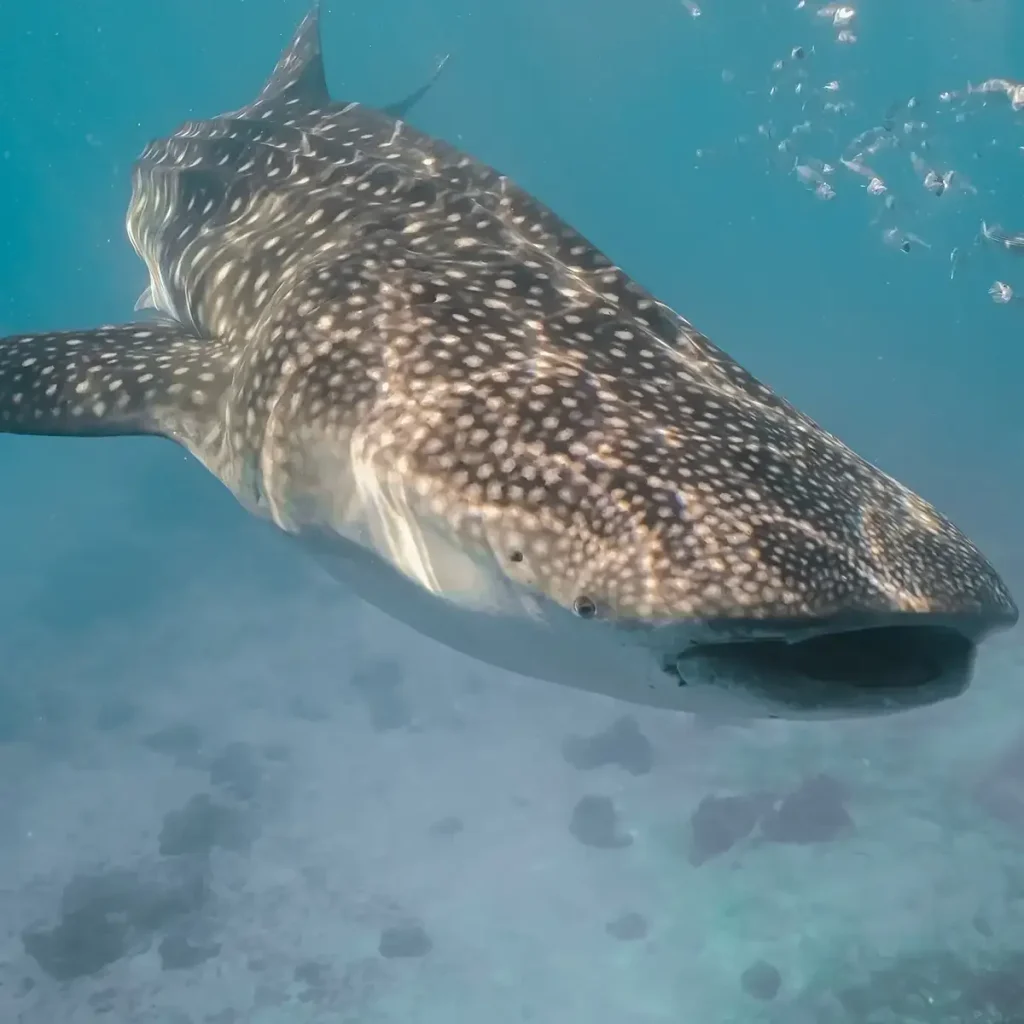
- Cenderawasih Bay (Indonesia) — Year-round, 90%+ encounter rate, ethical (mostly), $3,400-13,500 per trip, 32-44 hours travel from US/EU. Best for: divers wanting reliable encounters with minimal crowds.
- Isla Mujeres (Mexico) — June-September only, 70-85% encounter rate, $1,500-3,500 per trip, 8-14 hours travel from US/EU. Best for: short-trip whale shark snorkeling with easy access.
- Donsol (Philippines) — November-May, 60-80% encounter rate, $1,200-2,800 per trip, 22-34 hours travel from US/EU. Best for: budget-conscious snorkelers willing to gamble on sightings.
- Ningaloo (Western Australia) — March-July, 80-95% encounter rate (organized tours), $2,800-5,500 per trip, 22-28 hours travel from US/EU. Best for: those preferring structured Western tour operations.
- Maldives (year-round) — South Ari Atoll, year-round, 50-70% encounter rate, $2,500-7,500 per trip, 18-26 hours travel from US/EU. Best for: combining whale sharks with luxury island stays.
The honest summary: Cenderawasih has the most reliable encounters in the world, but is the most logistically demanding destination to reach. If your priority is “I want to definitely see whale sharks underwater,” Cenderawasih wins. If your priority is “I want a quick whale shark trip,” choose Mexico instead.
Combining Cenderawasih with Other Indonesia Destinations
Most serious visitors combine Cenderawasih with one or more nearby Indonesian marine destinations, since the journey from origin city is so substantial. Common 2-3 week itineraries:
- Cenderawasih + Raja Ampat liveaboard — The classic Bird’s Head Seascape combination. 14-21 night liveaboard covers both areas. $9,500-15,500 per person.
- Cenderawasih + Wakatobi Dive Resort — Pelagic + macro combination. Cenderawasih liveaboard 7-10 nights, then Wakatobi 7 nights. $14,500-22,500 per person.
- Cenderawasih + Komodo — Whale sharks + Komodo dragons. Adds 5-7 days at Rinca/Komodo. $11,500-18,500 per person.
- Cenderawasih + Banda Sea — Both eastern Indonesia destinations on a 12-15 night liveaboard. $9,800-14,200 per person.
The Verdict: Should You Book Cenderawasih?
If you have already done a typical whale shark trip (Mexico, Philippines, Maldives) and want the absolute peak of the genre — reliable encounters, minimal crowds, ethically-managed operations, and an opportunity to combine with Indonesia’s other world-class diving — Cenderawasih Bay is genuinely worth the journey. The travel time is real (plan 32-44 hours of transit), the cost is real ($7,000-9,500 average for a quality liveaboard), and the infrastructure is rustic compared to Maldivian alternatives. But the experience is also genuinely singular: there is nowhere else on Earth where wild whale sharks meet your boat on demand, fed by traditional fishermen using techniques that predate tourism by decades. For divers and photographers seeking the world’s most reliable whale shark encounter, no other destination compares.
Plan Your Cenderawasih Bay Trip
Custom itinerary planning, resort booking, and trip coordination by our Indonesia luxury travel specialists.