
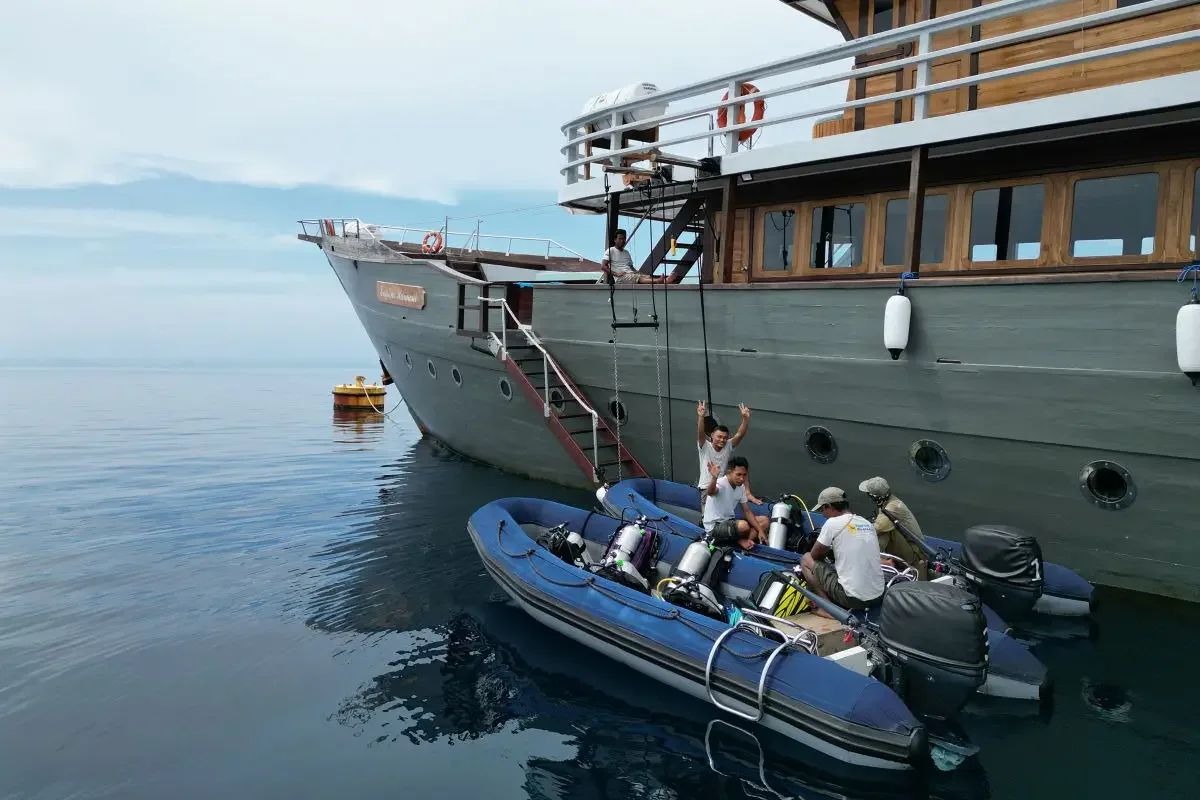
Yes, visiting cenderawasih-travel/”>Cenderawasih Bay in Papua is considered safe for tourists, particularly when traveling with an established tour operator on a liveaboard. The region’s safety profile is defined by its remoteness and the nature of its tourism infrastructure.
- The bay is geographically isolated from areas of political unrest in Papua’s highlands.
- Reputable liveaboards and resorts adhere to strict international safety protocols and employ experienced local guides.
- The primary challenges for visitors relate to remote travel logistics and health precautions, not personal security threats.
The low, rhythmic thrum of the phinisi’s engine is the only sound that breaks the stillness of the pre-dawn air. You are floating in the center of a vast, cobalt-blue amphitheater, its liquid floor mirroring a sky just beginning to blush with color. The air, thick with salt and the promise of equatorial heat, feels ancient. Then, a shadow, impossibly large, detaches from the deep. A 12-meter whale shark, its back a constellation of pale yellow spots, rises to the surface with a serene indifference that recalibrates your sense of scale. This is the daily reality in Cenderawasih Bay, a place so removed from the world’s noise that questions about safety seem to belong to another dimension entirely. Yet, for the discerning traveler, they are essential questions to ask before embarking on one of the planet’s last great expeditions.
Demystifying the “Papua” Question: Geography and Context
Let’s address the primary concern head-on. The word “Papua” often appears in news headlines associated with a long-standing independence movement and political friction. It’s a valid point of inquiry, but one that requires a sharp lesson in geography. The island of New Guinea is vast, and the Indonesian provinces that comprise its western half are immense territories of dense jungle, rugged highlands, and sprawling coastlines. The areas that experience unrest, such as the highlands around the Grasberg Mine near Timika, are hundreds of kilometers away from the tranquil waters of Cenderawasih Bay. To put it in perspective, the distance from Nabire, a key entry point to the bay, to Timika is over 400 kilometers of nearly impassable terrain—a distance greater than that between Paris and Brussels.
Cenderawasih Bay itself is a massive, sheltered body of water on the northern coast of West Papua, covering an area of over 14,535 square kilometers. A significant portion of this, as noted by Indonesia’s official tourism board, is protected as the Teluk Cenderawasih National Park, established in 1993. This designation makes it Indonesia’s largest marine national park. The environment here is one of marine conservation and small, sea-dependent communities. The security concerns of the inland regions simply do not translate to this isolated marine sanctuary. The focus within the park is on preservation and the unique symbiosis between local fishermen and the resident whale shark population. For travelers, the experience is curated, remote, and insulated from the complex political realities of the broader region.
The On-the-Ground Reality: What Our Sources Say
To move beyond maps and into the human element, I spoke with Michael Sitan, a Jakarta-based expedition leader who has been guiding trips into Indonesia’s remote east for over two decades. “The narrative about Papua is often painted with a single, broad brush,” he told me via a crackly satellite call from his vessel near the Auri Islands. “In Cenderawasih, the reality is a world apart. The communities—the Biak, Wandamen, and Yapen peoples—have a deep, ancestral connection to the sea. Tourism, specifically the high-value, low-impact model of liveaboards, is a welcome and vital part of their economy.” He explained that the atmosphere is one of mutual respect. The local fishermen on their traditional fishing platforms, or bagans, are the gatekeepers to the whale shark encounters, and they work in a cooperative, long-standing relationship with the dive operators.
This isn’t a recent development. The whale sharks’ habit of feeding on the small baitfish that slip through the fishermen’s nets has been observed for decades. This unique, predictable aggregation is the cornerstone of the bay’s appeal. A typical liveaboard expedition, lasting from 7 to 11 days, is built around these interactions. The safety record within the marine park is exemplary. “The biggest risk out here,” Michael laughed, “is forgetting to apply sunscreen or dropping your camera overboard. The human element is one of partnership.” This sentiment is echoed across the industry. The small number of permitted vessels—fewer than 20 at any given time—fosters a tight-knit community where information is shared, and standards are kept high. The focus is entirely on the marine environment, which is why a journey to Cenderawasih Bay remains a pinnacle experience for seasoned divers and marine life enthusiasts.
Navigating with Experts: The Indispensable Role of Liveaboards
The key to safely and successfully visiting Cenderawasih Bay in Papua is understanding that it is not a destination for independent, ad-hoc travel. The region’s remoteness and lack of infrastructure make a professionally managed expedition essential. This is the domain of high-end liveaboards and a few specialized eco-resorts. These operators are the logistical and safety backbone of any trip, providing a seamless bubble of security from the moment you land in a Papuan gateway city like Nabire or Manokwari. They handle airport transfers, all necessary permits, and provide a controlled environment for the duration of your stay. The vessels themselves are typically modern phinisis or steel-hulled ships built to international safety standards (SOLAS-compliant).
Onboard, you are in the hands of professionals. The crews are comprised of experienced Indonesian captains who have navigated these waters for years, along with Western and local divemasters who often have thousands of logged dives specifically within the bay. They possess an intimate knowledge of the currents, dive sites, and animal behaviors. A high-end 10-day charter can range from $5,000 to $8,000 per person, a price that reflects the immense logistical effort and the comprehensive safety net provided. These ships are equipped with emergency oxygen, extensive first-aid kits, satellite phones, and often, limited satellite Wi-Fi. The entire experience of exploring the unique marine life of Cenderawasih Bay is meticulously curated to mitigate risk and maximize wonder. This managed approach is precisely why the destination maintains its pristine allure and impeccable safety record for tourists.
Health and Environmental Considerations: The Real Risks
When we shift the conversation from geopolitical safety to practical travel concerns, we find the more relevant risks. Like many parts of Southeast Asia, Papua has mosquito-borne illnesses such as malaria and dengue fever. However, the risk is significantly lower when living on a boat offshore, away from coastal villages and benefiting from sea breezes. Nonetheless, it is imperative to consult a travel medicine specialist at least 4-6 weeks before your trip to discuss appropriate antimalarial prophylaxis and other vaccinations. The most pressing health concerns are those common to any remote, tropical dive trip: dehydration, severe sunburn, and potential marine-related injuries. Reputable operators will brief guests extensively on these topics.
Dive safety is paramount. While the bay’s waters are generally calm, all diving carries inherent risks. Ensuring you have comprehensive travel and dive insurance, such as that offered by Divers Alert Network (DAN), is non-negotiable. The nearest hyperbaric chamber is in Manado or Bali, a significant distance away, reinforcing the need for conservative dive profiles. Beyond personal health, the greatest responsibility lies in environmental stewardship. The bay is part of the Coral Triangle, an area of immense marine biodiversity. It is also on the UNESCO World Heritage Tentative List for its unique geological and ecological characteristics, including over 950 species of fish and 500 species of coral. The real “danger” is the one tourists can pose to this fragile ecosystem. Strict park rules apply: no touching whale sharks or any marine life, use only reef-safe sunscreen, and maintain perfect buoyancy control. Adhering to these guidelines ensures the bay remains a sanctuary for generations to come.
The Journey Itself: Logistics of Reaching a Remote Paradise
The journey to Cenderawasih Bay is an expedition in itself, a multi-leg process that underscores its magnificent isolation. There are no direct international flights. The typical route begins with a flight into a major Indonesian hub like Jakarta’s Soekarno-Hatta International Airport (CGK) or Bali’s Ngurah Rai International Airport (DPS). From there, you will take a domestic overnight flight to one of the two primary Papuan gateway cities: Nabire (NBX) or Manokwari (MKW). Airlines such as Garuda Indonesia and Batik Air operate these routes, which typically take between 5 and 7 hours. Due to flight schedules, an overnight stay in a hub city like Makassar (UPG) is sometimes required.
Upon arrival in Papua, the logistical complexities dissolve as your chosen liveaboard operator takes over. Their representatives meet you at the small, regional airport, handle your luggage, and transfer you directly to the port where your vessel awaits. This seamless transition is a critical component of the safety infrastructure. You are never left to navigate the local environment on your own. The time difference is GMT+9 (Eastern Indonesia Time), two hours ahead of Jakarta. While the travel can be arduous, it serves as a filter, ensuring that those who make the journey are dedicated to the experience. The effort involved in planning a trip to see the whale sharks of Cenderawasih Bay is part of what makes the reward so profound. It’s a testament to the fact that the world’s most extraordinary places still require a genuine pilgrimage.
Quick FAQ: Your Cenderawasih Bay Safety Questions Answered
Do I need a special permit for visiting Cenderawasih Bay in Papua?
Yes. All visitors to the Teluk Cenderawasih National Park must have a park permit, known as a PIN. Additionally, travel to the Papua region sometimes requires a travel permit called a Surat Jalan. Your liveaboard operator will arrange and acquire all necessary permits on your behalf before your arrival. The cost for the marine park tag is typically around IDR 1,000,000 (about $65 USD) and is often included in your package.
Is there reliable communication in the bay?
No. You should expect to be almost completely disconnected. Cellular service is nonexistent in the vast majority of the bay. Premier liveaboards are equipped with satellite phones for emergency use and may offer limited, slow, and expensive satellite Wi-Fi packages, but these are not suitable for anything beyond essential email. Embrace the digital detox; it’s an integral part of the experience.
What is the political situation in West Papua?
West Papua has a complex political history with an ongoing, low-level independence movement. However, related activities and the Indonesian government’s security focus are almost exclusively confined to specific inland highland regions, particularly in Central Papua province. The coastal and marine areas frequented by tourists, such as Cenderawasih Bay and Raja Ampat, are geographically and politically removed from these hotspots and remain stable and safe for tourism.
Are there specific cultural customs to be aware of?
When your itinerary includes a visit to a local village, cultural sensitivity is key. Dress modestly, ensuring your shoulders and knees are covered. The Papuan people are generally warm and welcoming, but it is polite to always ask for permission before taking photographs, especially of individuals or inside homes. Your guide will act as a cultural bridge and often brings small, appropriate gifts like school supplies or staple foods for the community.
The question of whether visiting Cenderawasih Bay in Papua is safe can be answered with a confident yes, qualified by the necessity of professional guidance. The concerns that flicker from news headlines fade in the face of the bay’s geographic reality and the robust, well-established tourism framework. The journey is long, the logistics are complex, and the environment demands respect, but these are challenges of exploration, not threats to personal safety. For the traveler seeking an encounter that is both profound and primal, the gentle giants of this remote Indonesian bay await. Exploring cenderawasih bay with the right partner transforms a daunting expedition into a seamless, unforgettable adventure into one of the planet’s last, truly wild marine sanctuaries.