
- Guaranteed, year-round encounters with filter-feeding whale sharks.
- Dives on intact World War II aircraft and shipwrecks.
- Exploration of pristine, remote coral reef systems with high endemic species counts.
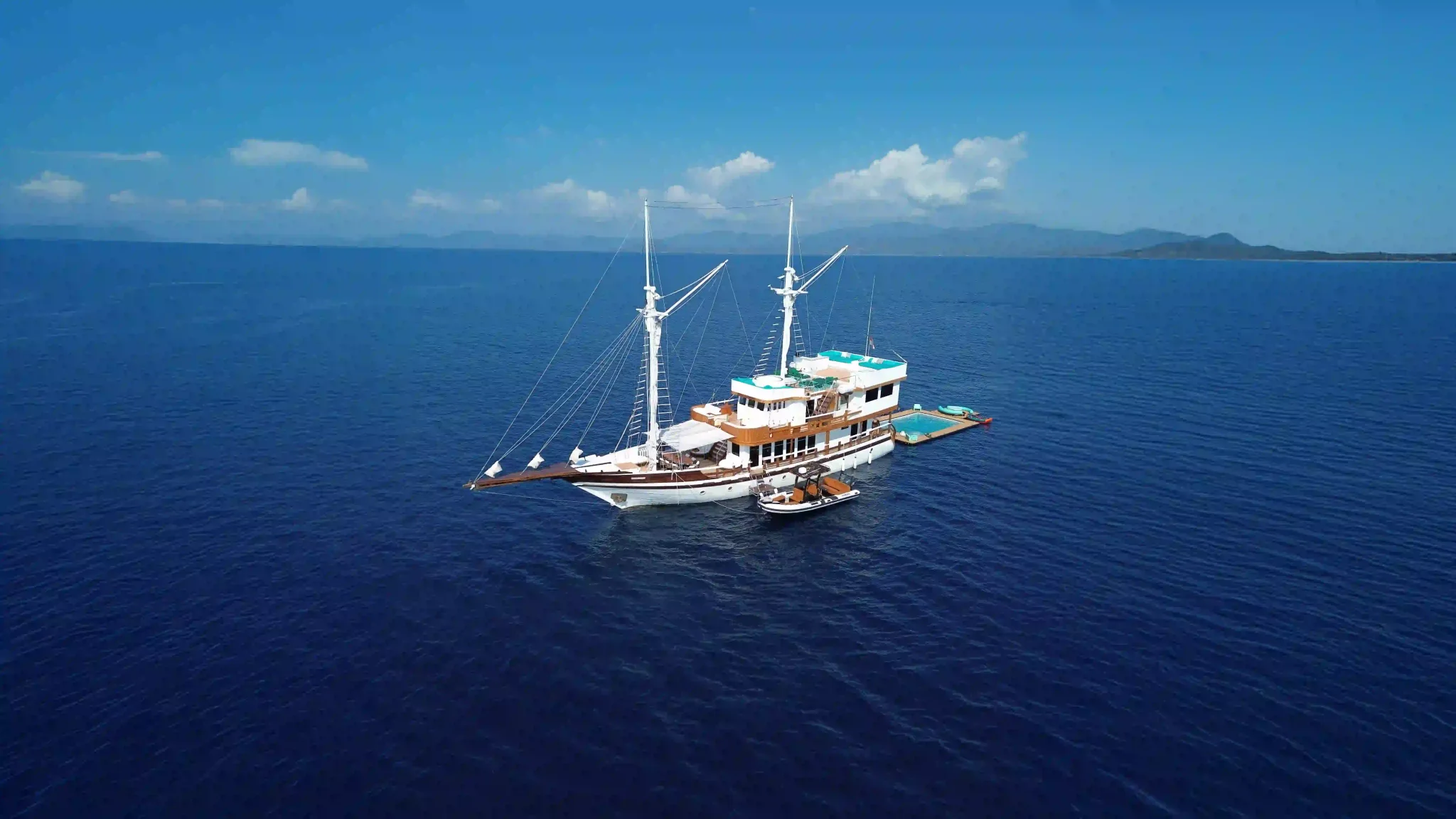
The morning light filters through the porthole, casting a soft, golden hue across the teakwood of my cabin. There is a gentle, almost imperceptible, rocking motion—the only indication that my world for the next seven days is a 50-meter traditional phinisi schooner, floating on the placid, turquoise surface of Cenderawasih Bay. On the deck above, the crew is making final preparations. The scent of freshly brewed Sumatran coffee mingles with the salt air. This is not just another dive trip; this is a meticulously curated expedition into one of the planet’s last truly wild marine frontiers, a place where history and nature have converged in the most dramatic fashion.
The Phinisi: Your Private Vessel into the Unknown
The concept of luxury travel to Cenderawasih is best realized aboard a private charter vessel. Forget cramped quarters and communal dining. We’re talking about floating sanctuaries like the Dunia Baru or Sequoia, vessels that redefine the liveaboard experience. These are not merely boats; they are custom-built phinisis, handcrafted by Konjo boat builders in South Sulawesi, blending centuries-old maritime tradition with state-of-the-art amenities. My suite, one of only seven, features a king-sized bed, a marble-clad en-suite, and panoramic windows. The guest-to-crew ratio is nearly one-to-one, with 18 staff attending to a maximum of 14 guests. This includes a private chef crafting multi-course meals from locally sourced ingredients, a dedicated cruise director, and, most importantly, an expert dive team. As our expedition leader, Alex Hartman, a marine biologist with 15 years in Indonesian waters, explained on our first evening, “We don’t follow a rigid schedule. We follow the wildlife, the tides, and the desires of our guests. If a pod of dolphins appears at dawn, we launch the tenders. If you want to spend four hours with the whale sharks, we make it happen.” This level of bespoke service is the core of the experience. The dive deck is spacious, with individual rinse tanks and a camera room that would satisfy a professional photographer, ensuring every part of the dive process is seamless and comfortable.
Day 1-2: Arrival in Biak and the Sunken Ghosts of War
Our journey commences at Frans Kaisiepo Airport (BIK) in Biak, an island with a deep and turbulent history. A private transfer whisks us from the small terminal to the harbor, where our phinisi awaits. After a welcome briefing and settling in, the real exploration begins. The waters around Biak and the nearby Padaido Islands were a major theater of operations during World War II’s Pacific Campaign. Consequently, the seabed is a museum of military history. Our first checkout dive is on a Japanese “Cross Wreck” patrol boat, sitting upright at 20 meters. The vessel is remarkably intact, encrusted with corals and swarmed by glassfish. Over the next two days, we explore a submerged P-47D Thunderbolt fighter plane, its cockpit eerily preserved, and several Catalina flying boat wrecks. These are not just dives; they are somber, reflective journeys into the past. The visibility here can exceed 30 meters, and the warm, 29°C water makes for comfortable, extended bottom times. Alex points out that fewer than 1,000 divers visit these specific wrecks annually, a stark contrast to the crowded sites of Truk Lagoon. This exclusivity is a key component of a true luxury Cenderawasih expedition, offering a personal connection to history without another dive boat in sight.
Day 3-4: The Whale Shark Phenomenon of Kwatisore Bay
On the morning of day three, we awake to a different world. We have navigated overnight to the southern reaches of the bay, near the village of Kwatisore. Here, a unique and symbiotic relationship has formed between the world’s largest fish and local fishermen. The fishermen operate large, stationary fishing platforms known as bagan. These platforms use massive nets and bright lights to attract baitfish. The whale sharks have learned that these bagan are a reliable source of food, congregating beneath them to feed on the small fish that slip through the nets. This is what makes Cenderawasih Bay globally significant: the whale shark encounters are not seasonal but a year-round certainty. By 8 AM, we are in the water. There are not one or two, but six whale sharks, ranging from 4 to 10 meters, circling gracefully beneath a single bagan. They are not shy; they are curious and accustomed to human presence. For the next two days, we spend hours snorkeling and diving with these gentle giants. Unlike whale shark tourism in other parts of the world, which often involves chaotic boat chases, here the experience is serene and respectful. We simply slip into the water and wait for them to approach. The local fishermen, who view the sharks as good luck, are integral to the experience, occasionally tossing a handful of baitfish to keep them engaged.
Day 5: The Pristine Reefs and Endemic Species of the Auri Islands
After the immense scale of the whale sharks, day five is a shift in focus to the intricate and scientifically important reef systems of the Auri Islands. This archipelago, located in the center of the bay, showcases why the region is part of the Teluk Cenderawasih National Park, a designated UNESCO World Heritage Site candidate. The area’s relative isolation, due to its geological history of being semi-enclosed, has led to a high degree of endemism. “We’re diving on reefs where new species are still being discovered,” Alex tells us during the dive briefing. “Keep an eye out for the Cenderawasih walking shark, Hemiscyllium galei, which uses its fins to ‘walk’ across the seafloor.” The coral gardens here are extraordinary. At a site called “Tanjung Ayami,” we descend upon vast, sloping fields of hard corals—table, staghorn, and brain corals—all in perfect condition. The fish life is prolific, a vibrant mix of damselfish, anthias, and butterflyfish. The diving here is different; it’s about appreciating the health and complexity of a reef ecosystem that has been largely untouched by the pressures seen elsewhere in the Coral Triangle. We complete three dives, each revealing another facet of the bay’s biodiversity, from tiny pygmy seahorses clinging to gorgonian fans to squadrons of bumphead parrotfish grazing on the reef flat.
Day 6-7: Roon Island’s Waterfalls and Departure from Manokwari
Our final full day is a blend of underwater and topside exploration around Roon Island. The morning begins with our last two dives at a site known for its dramatic underwater topography, featuring swim-throughs and overhangs decorated with soft corals. But the highlight is a terrestrial excursion. We take the tenders to a secluded cove and embark on a short trek through the dense Papuan rainforest to a cascading waterfall. The cool, fresh water is a welcome contrast to the salt of the sea, and it’s a powerful reminder of the raw, untamed nature of West Papua, a province detailed by Indonesia’s official tourism board, indonesia.travel. This integration of land-based activities adds another layer to the journey, connecting the marine world with the island ecosystems that surround it. That evening, we enjoy a final gourmet dinner under the stars as the phinisi begins its final passage toward Manokwari (MKW). The traverse from Biak to Manokwari provides a complete geographical and ecological cross-section of the bay. On the morning of day seven, after a final breakfast, we disembark in Manokwari for our flights home, carrying with us the profound experience of having visited one of the ocean’s most protected and remarkable realms. The logistics are handled flawlessly, a final touch in a week defined by impeccable service and unparalleled access.
Quick FAQ on Your Cenderawasih Expedition
What is the best time of year for luxury travel to Cenderawasih? While the whale shark encounters are consistent year-round, the calmest sea conditions and driest weather are typically found between April and October, making this the peak season for liveaboard charters. What level of diving certification is required? An Advanced Open Water certification is recommended to comfortably enjoy all the sites, including the deeper WWII wrecks which can be around 25-30 meters. However, operators can accommodate Open Water divers with careful site selection. How much can I expect to pay for a 7-day luxury charter? Pricing varies based on the vessel and level of exclusivity, but for a high-end phinisi with a private charter model, expect rates to range from $8,000 to $15,000 per person for a 7-day all-inclusive itinerary. Are there non-diving activities available? Absolutely. Most luxury charters offer a full suite of water toys, including sea kayaks, stand-up paddleboards, and snorkeling gear. Excursions to remote villages, rainforest treks to waterfalls, and bird-watching opportunities are also common.
A journey through cenderawasih bay is more than a series of dives; it is an immersion into a world where nature’s grandest spectacles and poignant historical relics coexist in serene isolation. The ability to experience this with the comfort, privacy, and flexibility of a luxury liveaboard elevates the trip from a vacation to a true expedition. For the discerning diver who has seen the great reefs of the world, this corner of West Papua offers something increasingly rare: a genuine sense of discovery. To begin planning your own private charter into this remarkable marine sanctuary, explore the bespoke itineraries available at Cenderawasih Bay.